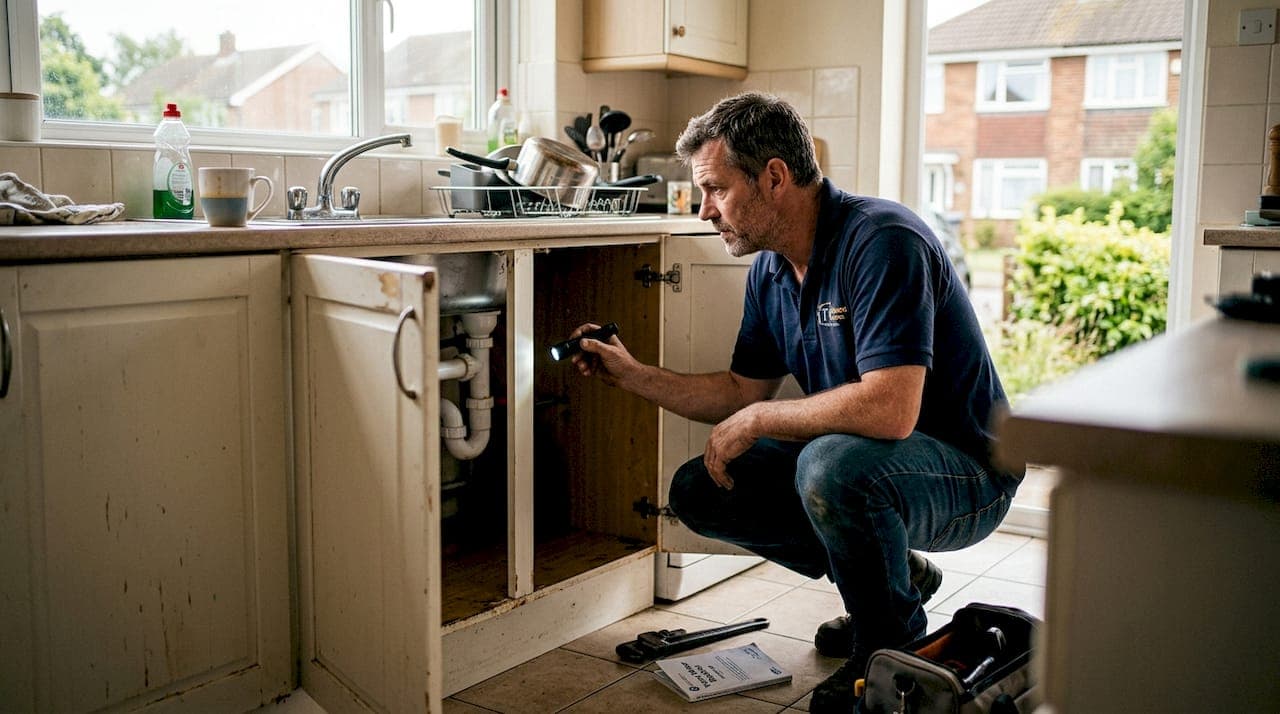
Thames Valley loses a staggering amount of water every single day, and a significant portion of that loss starts inside homes just like yours. UK leakage sits at around 560 Ml/d, making Thames Water one of the worst performers nationally at 22.5% above target. The frustrating truth is that many of these leaks are completely invisible until the damage is already done. This guide will help you spot the warning signs, understand what causes leaks, and take the right action before a small drip becomes a very expensive problem.
Table of Contents
- Why plumbing leaks matter in Thames Valley
- Spotting the signs of a plumbing leak
- How leaks are detected: From DIY checks to expert tools
- Repair options: What you can fix and when to call a professional
- Special cases: Complex leaks, insurance, and outdoor risks
- Prompt local help: Emergency plumbing and repair in Thames Valley
- Frequently asked questions
Key Takeaways
| Point | Details |
|---|---|
| Early signs matter | Damp, mould, and unexplained high bills are key warning signals of leaks. |
| DIY checks save time | A simple water meter test helps spot hidden leaks before damage escalates. |
| Know your limits | Tightening joints is fine for minor problems, but hidden or slab leaks need professional help. |
| Insurance has limits | Sudden leaks may be covered, but gradual issues are usually not—inquire with your provider. |
| Act quickly | Prompt action protects your property and keeps repair costs down. |
Why plumbing leaks matter in Thames Valley
Thames Valley consistently ranks among the regions with the highest leakage rates in the UK. According to Thames Water's own leakage data, the network loses hundreds of millions of litres daily, and homeowners are directly part of that picture. Supply pipes running from the boundary of your property to your internal plumbing are entirely your responsibility to maintain and repair.
Leaving a leak untreated can lead to:
- Structural damage to walls, floors, and foundations
- Mould growth that poses serious health risks
- Inflated water bills that climb steadily without explanation
- Subsidence in severe cases, particularly with underground leaks
- Voided home insurance if negligence is proven
"Homeowners in Thames Valley are responsible for supply pipes within their property boundary, and undetected leaks can cause significant financial and structural harm."
If you are on a water meter, Thames Water may offer a leak allowance for your first reported leak, which can reduce your bill while repairs are carried out. For emergency leak support or to browse useful plumbing insights, local help is closer than you think. You can also find practical detecting leaks advice from WaterSafe to get started.
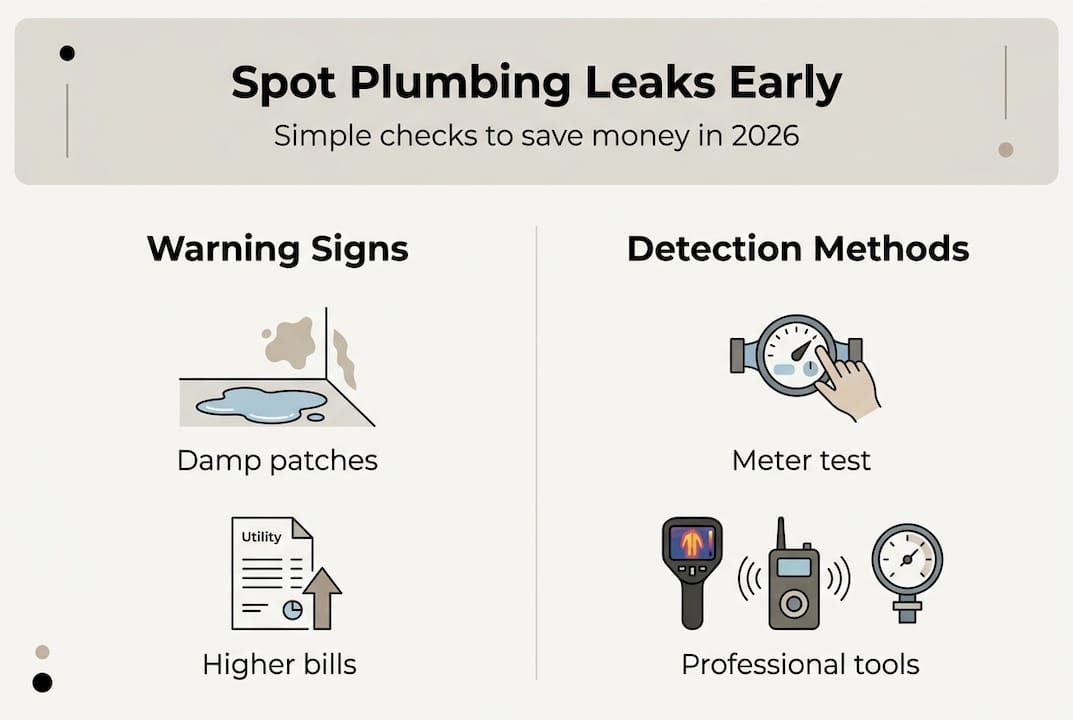
Now that you understand the Thames Valley context, let's identify the signs that a leak could be lurking in your home.
Spotting the signs of a plumbing leak
Most homeowners assume a leak will announce itself with a puddle or a dripping tap. In reality, the most common leak indicators are far more subtle and easy to dismiss until the damage is serious.
Here is what to watch for:
- Unexplained bill increases: A sudden spike in your water bill with no change in usage is a classic red flag.
- Damp patches: Discolouration on walls, ceilings, or floors, especially in rooms near pipework.
- Mould or mildew: Persistent mould in areas that should be dry is often a sign of moisture behind surfaces.
- Low water pressure: A drop in pressure throughout the house can indicate a leak somewhere in the supply line.
- The sound of running water: Hearing water move when everything is turned off is a strong indicator.
- Warm or cold floor patches: These can signal a slab leak, where a pipe beneath your concrete floor is leaking.
Slab leaks are particularly tricky because they sit beneath the floor and can go unnoticed for months. You might notice one area of your floor feeling warmer than usual, or a persistent damp smell with no visible source. These are not minor issues. Left alone, slab leaks can undermine your foundations.
"Hidden leaks, particularly those beneath floors or inside walls, often only reveal themselves through indirect clues like temperature changes or unexplained mould."
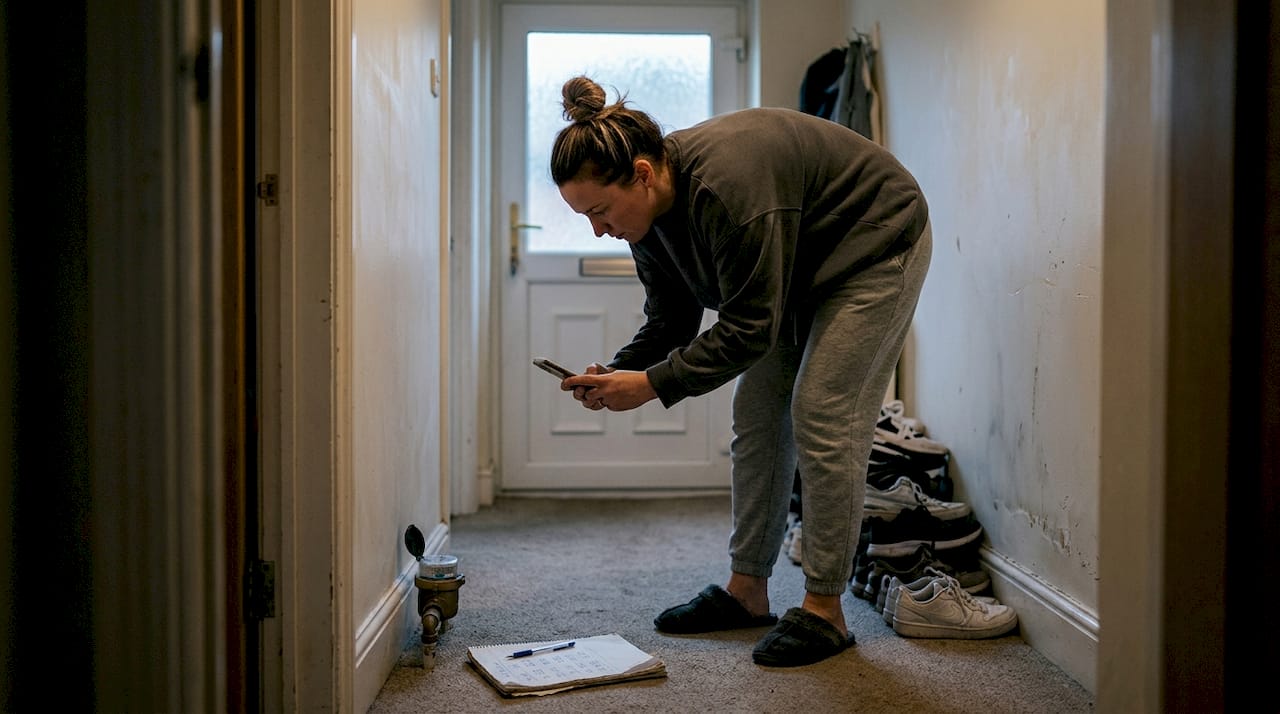
Pro Tip: Check your water meter reading before bed and again first thing in the morning without using any water overnight. If the reading has changed, you almost certainly have a leak somewhere.
For more practical advice, the top plumbing tips on the 999Plumber blog are worth bookmarking. Recognising the signs is essential, but pinpointing the leak's exact location often requires a range of methods.
How leaks are detected: From DIY checks to expert tools
Knowing that you have a leak is only half the battle. Finding where it is requires a methodical approach. Fortunately, you can start with a simple DIY test before calling anyone out.
DIY water meter test: Step by step
- Turn off all taps, appliances, and water-using devices in your home.
- Locate your water meter, usually near the boundary of your property.
- Note the current reading, including the low-flow indicator (a small dial or triangle).
- Wait 30 minutes without using any water.
- Check the meter again. If the reading or indicator has moved, water is escaping somewhere.
- To narrow it down, turn off the internal stop tap and repeat. Movement now points to an external supply pipe leak.
According to WaterSafe's leak guidance, this DIY meter test is one of the most reliable first steps a homeowner can take before calling a professional.
| Detection method | Who performs it | Strengths | Limitations |
|---|---|---|---|
| Meter test | Homeowner | Free, quick, no tools needed | Only confirms a leak exists, not location |
| Visual inspection | Homeowner | Identifies obvious damp or damage | Misses hidden or underground leaks |
| Acoustic sensors | Professional | Pinpoints leaks by sound in pipes | Requires specialist equipment |
| Thermal imaging | Professional | Reveals temperature anomalies in walls/floors | Higher cost, needs trained operator |
| Ultrasonic detection | Professional | Non-invasive, works through walls | Less effective in noisy environments |
| Smoke testing | Professional | Excellent for drainage and sewer leaks | Not suitable for pressurised supply pipes |
Pro Tip: Do not wait until you see visible damage to run a meter test. Running one every few months takes less than an hour and can catch a problem before it costs you thousands.
Once you know how leaks are found, you can better choose a suitable repair path.
Repair options: What you can fix and when to call a professional
Not every leak requires a professional. Some repairs are genuinely within reach for a confident homeowner with basic tools. The key is knowing the difference between a manageable fix and a job that needs qualified hands.
What you can safely tackle yourself:
- Tightening loose compression fittings on visible pipework
- Replacing a worn tap washer or O-ring
- Fixing a dripping showerhead with a new seal
- Applying waterproof tape as a very short-term patch on an accessible pipe
However, professional repair methods such as spot repair, pipe rerouting, trenchless pipe lining, and full repiping are necessary for anything hidden, structural, or under pressure. Attempting to dig up a slab or open a wall without the right tools and knowledge can cause far more damage than the original leak.
| Leak type | DIY possible? | Estimated cost (professional) | When to call a pro |
|---|---|---|---|
| Dripping tap | Yes | £50 to £120 | If DIY fails or pipe is corroded |
| Leaking joint (visible) | Possibly | £80 to £200 | If pipe is inaccessible or pressurised |
| Burst pipe | No | £150 to £400+ | Immediately |
| Slab leak | No | £500 to £2,000+ | Always, without exception |
| Hidden wall leak | No | £200 to £600 | As soon as suspected |
| Underground supply pipe | No | £300 to £1,500+ | Immediately |
Prevention is always cheaper than repair. Address minor issues like a slow drip or a slightly loose fitting before they escalate. Insulating pipes before winter, checking under sinks regularly, and keeping an eye on your water pressure can all reduce your risk significantly. For further reading, the common repairs guide covers a wide range of scenarios. If you are planning a kitchen or bathroom update, kitchen refurbishments can also be an opportunity to replace ageing pipework proactively.
Even with good maintenance, some situations require urgent response or special handling.
Special cases: Complex leaks, insurance, and outdoor risks
Some leaks fall into a category that goes well beyond a standard repair. These situations involve structural risk, insurance complications, or locations that are genuinely difficult to access.
High-risk leak locations to be aware of:
- Slab leaks: Pipes running beneath concrete floors, often caused by corrosion, ground movement, or poor installation
- Roof and ceiling leaks: Water ingress from above that can mimic internal plumbing leaks
- Garden and irrigation systems: Outdoor pipes that crack in cold weather or degrade over time, often going unnoticed for months
- Shared drainage: In older Thames Valley properties, shared drains can cause confusion over responsibility
Insurance cover for leaks is a topic that trips up many homeowners. Most standard home insurance policies will cover sudden accidental leaks but will specifically exclude gradual leaks that develop over time. This distinction matters enormously. If a pipe bursts overnight, you are likely covered. If a slow drip has been quietly damaging your floor for six months, your insurer may argue you should have noticed and acted sooner.
"For hidden leaks, especially those beneath slabs or inside walls, call a professional immediately. Delay increases both the structural risk and the likelihood your insurer will dispute the claim."
For complex or structural leaks, do not attempt to manage the situation yourself. Get emergency plumbing advice from a qualified local engineer who understands the specific challenges of Thames Valley properties. With all this understanding, you can be proactive if a leak happens in your home.
Prompt local help: Emergency plumbing and repair in Thames Valley
Acting fast when you suspect a leak is not just sensible, it can save you thousands of pounds and protect your home from lasting damage. Whether you have spotted damp on a wall, heard unexplained running water, or simply want peace of mind from a professional inspection, having a reliable local plumber on call makes all the difference.

999Plumber.co.uk operates 24 hours a day, 7 days a week across Thames Valley, with no call-out charges and a no-fix-no-fee promise. From urgent 24hr emergency plumber response to full leak investigations and repairs, the team handles everything from a dripping joint to a complex slab leak. If you have experienced plumbing emergencies before, you will know how quickly things can escalate. Bookmark the home plumbing tips page for ongoing guidance, and do not hesitate to call when something does not feel right.
Frequently asked questions
How can I tell if a leak is inside the house or outside?
Run a DIY meter test with the internal stop tap open, then repeat with it closed. If the meter stops moving when the stop tap is closed, the leak is inside; if it continues, the leak is in the external supply pipe or garden.
Are slab leaks covered by home insurance?
Most policies cover sudden accidental slab leaks but exclude gradual leaks that developed slowly over time. Always read your policy wording carefully and report the issue to your insurer as soon as it is discovered.
What should I do first if I suspect a hidden leak?
Turn off your water supply at the stop tap, check the meter for movement, and call a qualified plumber for advanced detection if the source is not immediately obvious. Do not delay, as hidden leaks worsen quickly.
Who is responsible for repairing water supply pipes in Thames Valley?
Homeowners are responsible for all pipes from the property boundary inwards. Thames Water manages the main network, but may offer a metered leak allowance to reduce your bill while you arrange repairs for a first-time reported leak.