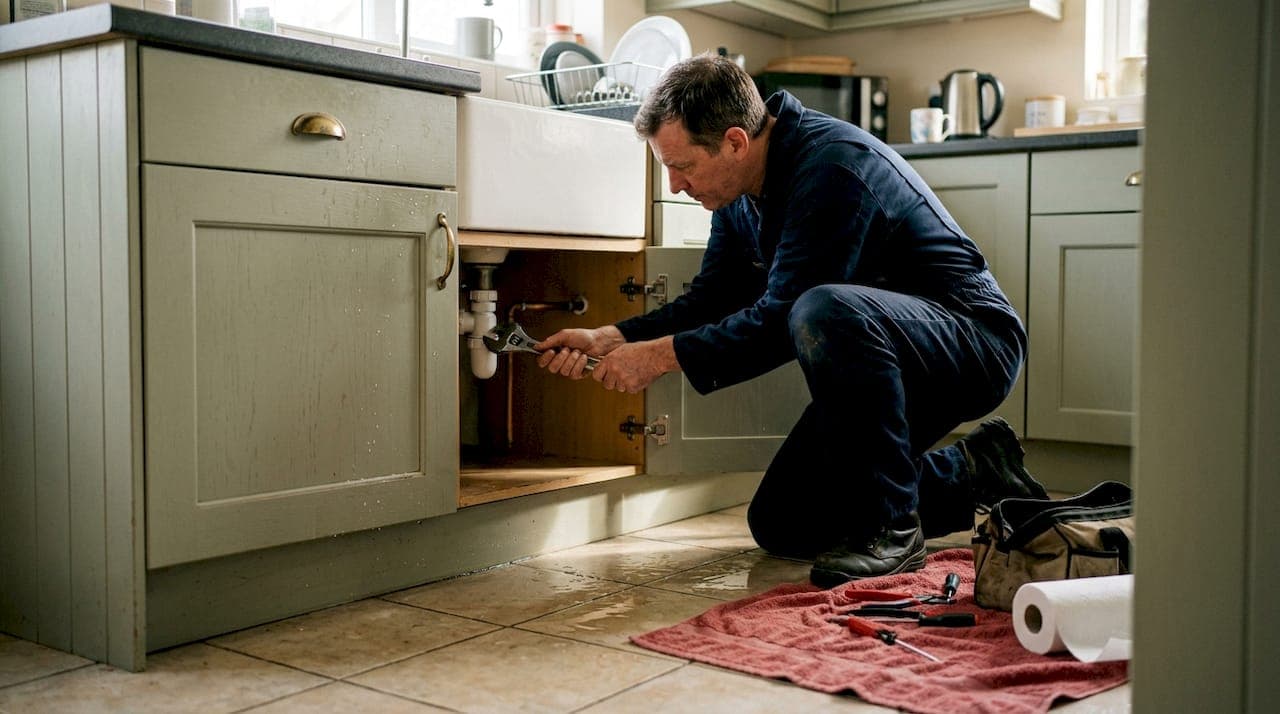
A small drip under the sink can feel like nothing. But leave it unchecked for 48 hours and you could be looking at soaked floorboards, damaged electrics, and a repair bill that runs into thousands. Emergency plumbing covers urgent situations that pose immediate risks to your property, health, or safety, and knowing the difference between a true emergency and a minor inconvenience can save you a great deal of money. For Thames Valley homeowners, where cold winters and ageing pipe networks are a real concern, getting this right matters more than most people realise.
Table of Contents
- What is emergency plumbing?
- The most common emergency plumbing issues
- How emergency plumbing services work
- How to decide if you need an emergency plumber
- What to do before the plumber arrives
- Get fast, reliable emergency plumbing support in Thames Valley
- Frequently asked questions
Key Takeaways
| Point | Details |
|---|---|
| Act on urgent leaks | Delaying emergency plumbing repairs can lead to much higher costs and property damage. |
| Know what’s urgent | Burst pipes, sewage backups, and total loss of heating or water all require immediate attention. |
| Quick local response | Most Thames Valley emergency plumbers will arrive within 1–2 hours to minimise your risk. |
| Prepare for emergencies | Knowing what to do before help arrives can limit water damage and speed up repairs. |
What is emergency plumbing?
Not every plumbing problem needs a midnight call-out. But some absolutely do. Emergency plumbing covers situations where waiting even a few hours could cause serious harm to your home, your health, or the people living in it. The key word is urgent. If the problem is getting worse by the minute, it qualifies.
Common emergency plumbing situations include:
- Burst pipes flooding walls, floors, or ceilings
- Severe leaks from supply lines or appliances
- Sewage backups creating health hazards
- Complete loss of water to the property
- Gas leaks requiring immediate evacuation
- Boiler failure during cold weather
Thames Valley properties, particularly older homes in Reading, Newbury, and Oxford, are especially vulnerable during cold snaps when pipes freeze and then burst as temperatures rise. Emergency plumbing in Reading call volumes spike sharply in January and February every year.
"Emergency plumbing refers to urgent services addressing sudden plumbing issues that pose immediate risks to property, health, or safety, such as burst pipes, severe leaks, sewage backups, gas leaks, and complete loss of water or heating."
It is also worth knowing that some unexpected plumbing emergencies happen in summer too, when increased water usage and heatwaves put pressure on older systems. Emergencies are not seasonal. They can happen any time.
The most common emergency plumbing issues
Understanding the main types of emergencies helps you spot trouble early. Here are the most common situations Thames Valley homeowners face.
Nearly half of 2025 calls involved burst pipes or severe leaks, with emergency costs running 50 to 150% higher than planned work. That is a significant financial hit on top of an already stressful situation.
Here is a quick comparison of the most common emergencies:
| Emergency type | Risk level | Urgency | Typical cost impact |
|---|---|---|---|
| Burst pipe | Very high | Immediate | 50 to 150% above standard |
| Sewage backup | Very high | Immediate | High, plus health risk |
| Boiler failure | High | Same day | Moderate to high |
| Gas leak | Critical | Evacuate now | Varies, safety first |
| Severe leak | High | Within hours | Moderate to very high |
| Loss of water | Moderate | Same day | Moderate |
A few things to watch for that signal a situation is escalating fast:
- Water spreading across multiple rooms or floors
- Discolouration or foul smell from taps
- Gurgling sounds from drains or toilets
- Sudden drop in water pressure across the whole property
- Visible damp patches appearing on walls or ceilings
For top homeowner plumbing tips on preventing these situations before they escalate, it pays to know your property's weak points. If you are finding emergency plumbers in Newbury or anywhere across the Thames Valley, having a trusted contact saved in your phone before disaster strikes is one of the smartest things you can do.
How emergency plumbing services work
So, what actually happens when you call for help? Let's look at the emergency process, from start to finish.
The moment you call, a good emergency plumber will ask you a few quick questions to assess the severity and dispatch the right engineer. Thames Valley response times average between one and two hours, and uncontrolled leaks are among the top causes of home insurance claims. Speed genuinely matters here.
Here is what a typical emergency call-out looks like:
- You call and describe the problem clearly, including location, severity, and whether water or gas is involved.
- The dispatcher assesses urgency and confirms an engineer is on the way.
- The engineer arrives with the tools and parts needed for the most common repairs.
- A diagnosis is made on site and you are given a clear explanation of the issue.
- The repair is carried out or temporary measures are put in place to stop further damage.
- You receive a full report of what was done and any follow-up work needed.
Here is a quick look at how emergency costs compare to routine work:
| Service type | Typical response time | Relative cost |
|---|---|---|
| Routine plumbing | Days to weeks | Standard rate |
| Urgent (same day) | Hours | 25 to 50% above standard |
| Emergency (out of hours) | 1 to 2 hours | 50 to 150% above standard |
Pro Tip: Before you call, locate your stopcock (the valve that shuts off your mains water supply). Knowing where it is and being able to tell the engineer saves precious time on arrival.
It is also worth knowing that many emergency plumbers, including us at 999Plumber, handle far more than just pipes. We cover plumbers and electrics as well as dealing with mains water leaks, so one call can often sort multiple problems at once.
How to decide if you need an emergency plumber
Sometimes it is hard to tell if you need urgent help or can wait till morning. Here is how to decide quickly and safely.
Work through this checklist:
- Is anyone in immediate danger? Gas leaks, sewage exposure, or flooding near electrics means you act now, no question.
- Is the problem getting worse? If water is spreading or pressure is dropping fast, do not wait.
- Have you lost a vital service? No heating in winter or no water at all counts as urgent.
- Could delay cause serious property damage? Uncontrolled leaks top insurance claims for a reason. Water moves fast and damages everything it touches.
- Is it affecting more than one area of the home? A single dripping tap can wait. Water coming through a ceiling cannot.
If you answered yes to any of the above, call an emergency plumber now. If none apply, it is likely safe to book a standard appointment for the next working day.
Pro Tip: Take photos or a short video of the problem before you call. This helps the engineer prepare and also gives you evidence for any insurance claim you may need to make.
Weather plays a bigger role than most people expect. Heavy rain and plumbing emergencies are closely linked, as storms overwhelm drainage systems and push water back into homes. Knowing how to save water in emergencies can also reduce the immediate impact while you wait for help.
What to do before the plumber arrives
Once you know you need a plumber and have called, here is what you can do right away to limit the fallout.
Plumbing leaks can cause substantial property damage if left unresolved, even for a short time. Acting quickly in the minutes before your engineer arrives can make a real difference to the final repair bill.
Here is what to do:
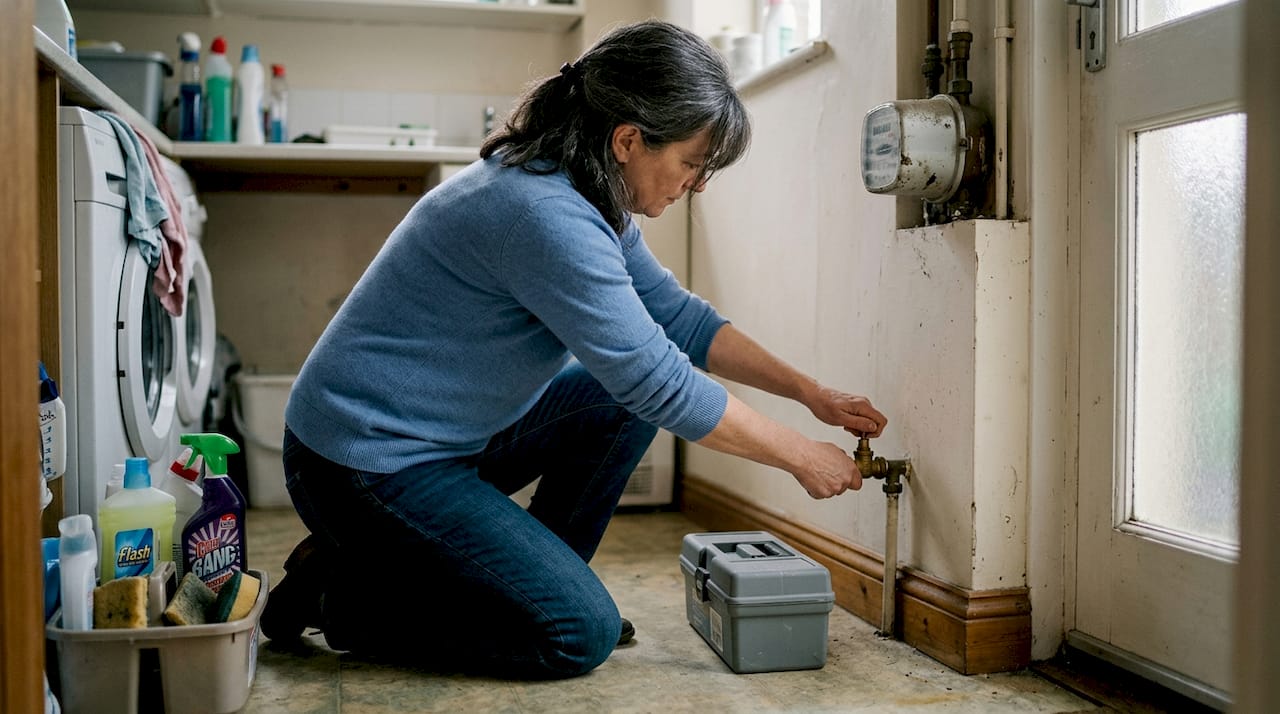
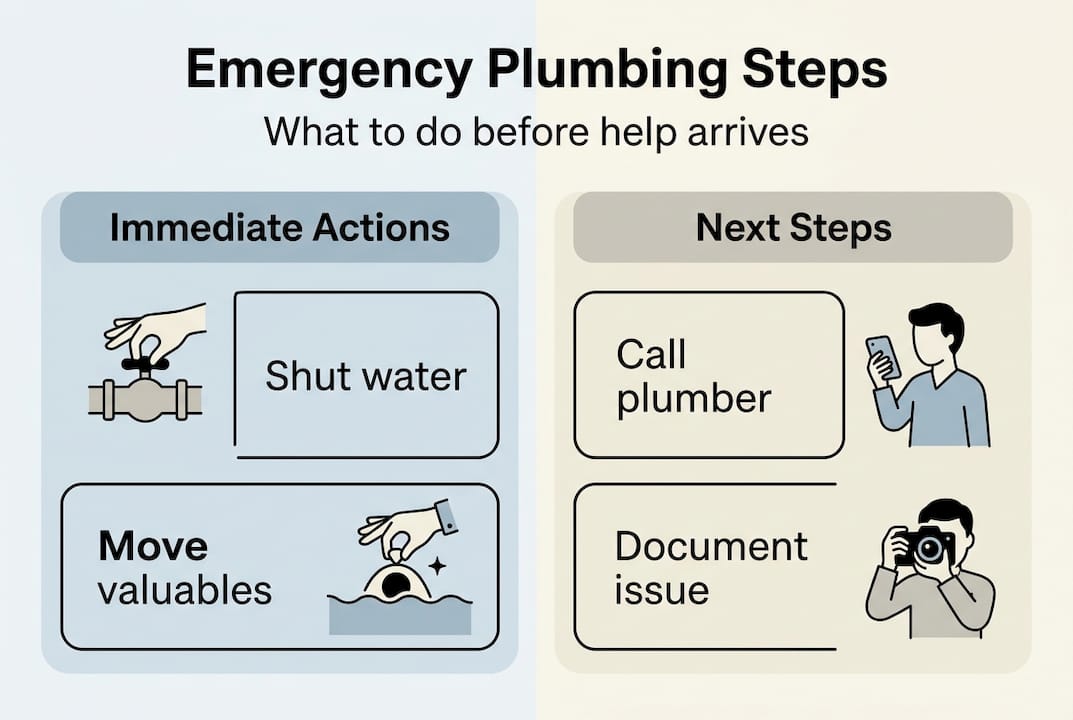
- Turn off the water supply at the stopcock if there is any active leak or burst pipe. It is usually found under the kitchen sink or near the front door.
- Switch off electricity in any rooms where water is present. Do not touch switches or sockets if the floor is wet. Use your fuse box instead.
- Move valuables, furniture, and electronics away from the affected area as quickly as you safely can.
- Place towels or buckets to contain water and slow the spread to other rooms.
- Document everything with photos and video for your insurance claim. Capture the source of the problem and all affected areas.
- Open windows if you suspect a gas leak and leave the property immediately. Do not use light switches or any electrical devices.
Pro Tip: Keep a note of your stopcock location, your boiler's make and model, and your home insurer's emergency number somewhere easy to find. A note on the fridge or saved in your phone takes seconds to set up and can save hours in a crisis.
For issues like sink smells and leaks that seem minor but could signal something bigger underneath, it is always worth getting a professional opinion sooner rather than later.
Get fast, reliable emergency plumbing support in Thames Valley
When every minute counts, the last thing you need is to be searching online for a plumber you can trust. At 999Plumber, we are available around the clock, every day of the year, with experienced engineers covering the full Thames Valley area.

We offer emergency 24hr plumbing with no call-out charges and a no fix no fee promise, so you know exactly where you stand from the moment you call. Whether you need an emergency plumber call out in the middle of the night or first thing on a Sunday morning, we will be there. You can also book an emergency plumber online in under two minutes. Save our number now, before you ever need it. That is the kind of preparation that pays off.
Frequently asked questions
What are the first signs of a plumbing emergency?
Look for sudden leaks, flooding, loss of water or heating, sewage smells, or visible pipe damage. Any of these signals an immediate risk to your property or health and should be treated as urgent.
How quickly can an emergency plumber arrive in Thames Valley?
Most emergency plumbers in Thames Valley respond within 1 to 2 hours on average, depending on your location and the time of day.
Will insurance cover emergency plumbing repairs?
Many home insurance policies cover sudden water damage caused by emergencies, but uncontrolled leaks top the claims list, so always check your policy wording and document everything before repairs begin.
How much more does emergency plumbing cost compared to normal work?
Emergency plumbing typically costs 50 to 150% more than standard work, and in extreme cases can be significantly higher, which is why acting fast to prevent further damage is always the better financial decision.