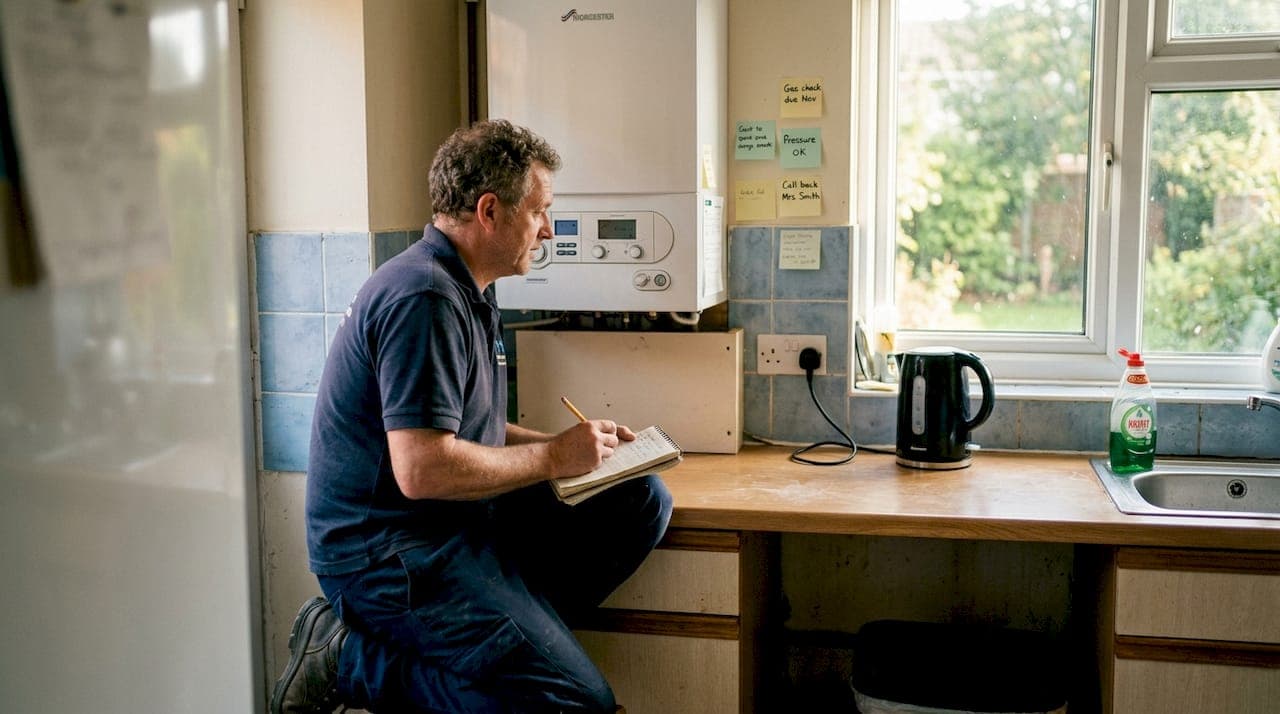
A boiler breakdown never announces itself politely. It happens on the coldest morning of the year, when the last thing you need is a cold shower and radiators that refuse to warm up. Many homeowners assume breakdowns only happen to ageing systems, but common boiler problems such as low pressure, leaks, frozen condensate pipes, and faulty diverter valves can strike any home, regardless of how new the boiler is. For Thames Valley homeowners, understanding what causes these failures, what you can safely do yourself, and when to call a professional is the difference between a quick fix and a week without heating.
Table of Contents
- Recognising common boiler breakdowns
- Why boilers break down in Thames Valley homes
- Safe DIY fixes and when to call a professional
- Preventing future breakdowns and long-term solutions
- Why most boiler breakdown advice misses Thames Valley realities
- How to get reliable emergency help in Thames Valley
- Frequently asked questions
Key Takeaways
| Point | Details |
|---|---|
| Spot breakdowns early | Typical symptoms include leaks, loss of heating, and odd noises; catching these fast prevents bigger failures. |
| Safe actions you can take | Repressurising, thawing pipes, and bleeding radiators are safe fixes, but always leave gas repairs to engineers. |
| Prevent with annual servicing | Regular maintenance saves cost and trouble, but 50% of UK homeowners still skip it. |
| Local help is available | Thames Valley experts provide rapid emergency support for breakdowns and servicing. |
Recognising common boiler breakdowns
Knowing what you are dealing with is the first step to sorting it quickly. Boiler problems tend to fall into a handful of categories, and most have clear warning signs if you know what to look for.
The most frequent boiler breakdowns include low boiler pressure, frozen condensate pipes, internal leaks, loss of heating or hot water, kettling noises, and faulty diverter valves. Each one has a distinct symptom that points you in the right direction before an engineer even arrives.
Here is a quick comparison of the most common issues and what they feel like in your home:
| Problem | Symptom you notice | Urgency level |
|---|---|---|
| Low pressure | Boiler display reads below 1 bar | Moderate |
| Frozen condensate pipe | Boiler locks out, gurgling noise | High in cold weather |
| Internal leak | Damp patch near boiler, rust staining | High |
| No heating or hot water | Radiators cold, taps run cold | High |
| Kettling noise | Rumbling or banging from boiler | Moderate |
| Faulty diverter valve | Hot water works but heating does not | Moderate |
The impact on your home goes beyond discomfort. A persistent leak can damage flooring, plasterwork, and electrics nearby. Kettling, which is the rumbling sound caused by limescale build-up on the heat exchanger, forces your boiler to work harder and shortens its life. A faulty diverter valve means your combi boiler cannot switch between heating and hot water properly, leaving you with one but not the other.
Symptoms to keep an eye on include:
- Pressure gauge reading below 1 bar or fluctuating wildly
- Yellow or orange flame instead of blue (potential carbon monoxide risk)
- Unusual smells, particularly sulphur or burning
- Boiler cutting out repeatedly after restarting
- Radiators cold at the top but warm at the bottom
A striking fact worth noting: half of UK homeowners skip annual boiler servicing, which dramatically increases the likelihood of an unexpected failure. Understanding boiler repair costs before you need them also helps you budget sensibly rather than panic-spending. For a broader picture of what to do when things go wrong, the emergency heating repair guide for Thames Valley is a practical starting point.
Why boilers break down in Thames Valley homes
Understanding symptoms is half the battle, but why are Thames Valley homes so affected by boiler problems in particular?
The Thames Valley sits in a region that experiences genuine cold snaps each winter, with temperatures regularly dropping below freezing overnight. That matters enormously for condensate pipes, which carry waste water from the boiler to an outside drain. When temperatures plummet, these pipes freeze, and the boiler shuts itself down as a safety measure. Frozen condensate pipes are one of the most common winter callouts across the region, and they are entirely preventable with basic insulation.
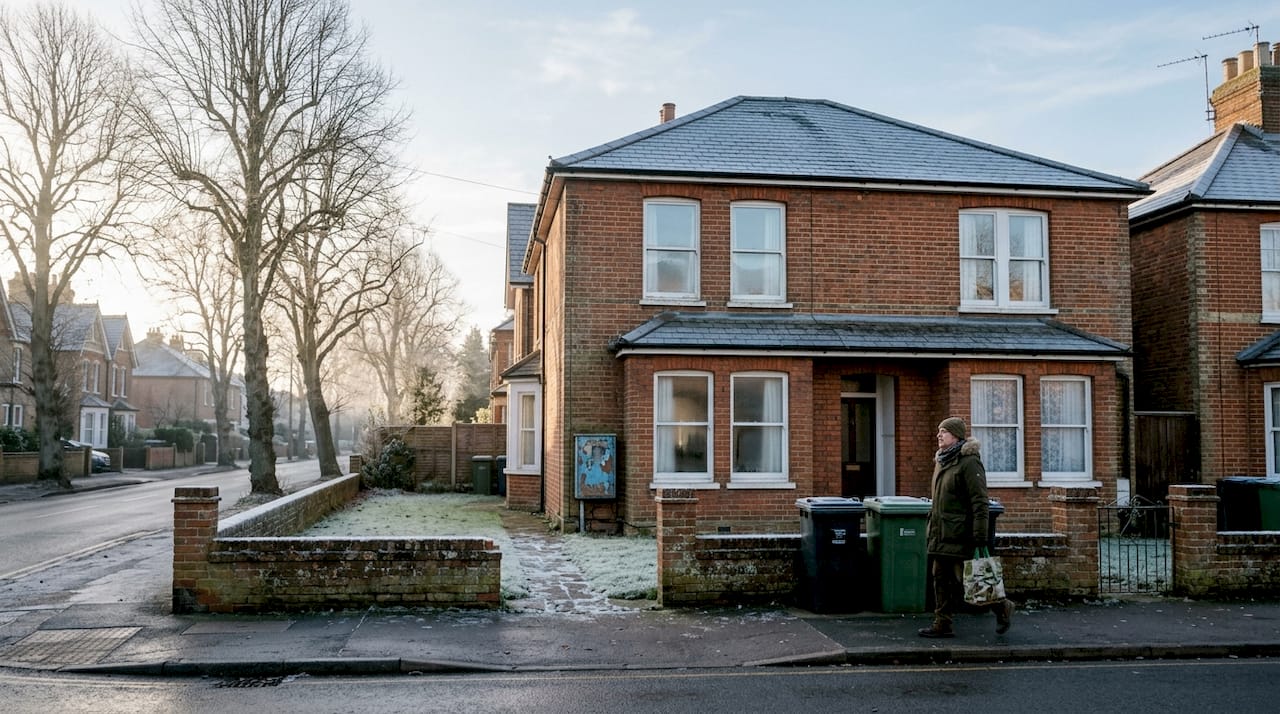
Older properties are another factor. Much of the Thames Valley housing stock includes Victorian terraces, Edwardian semis, and 1970s builds with heating systems that were never designed for modern usage levels. Pipes corrode, system sludge builds up, and boilers that have been patched rather than replaced become increasingly unreliable.
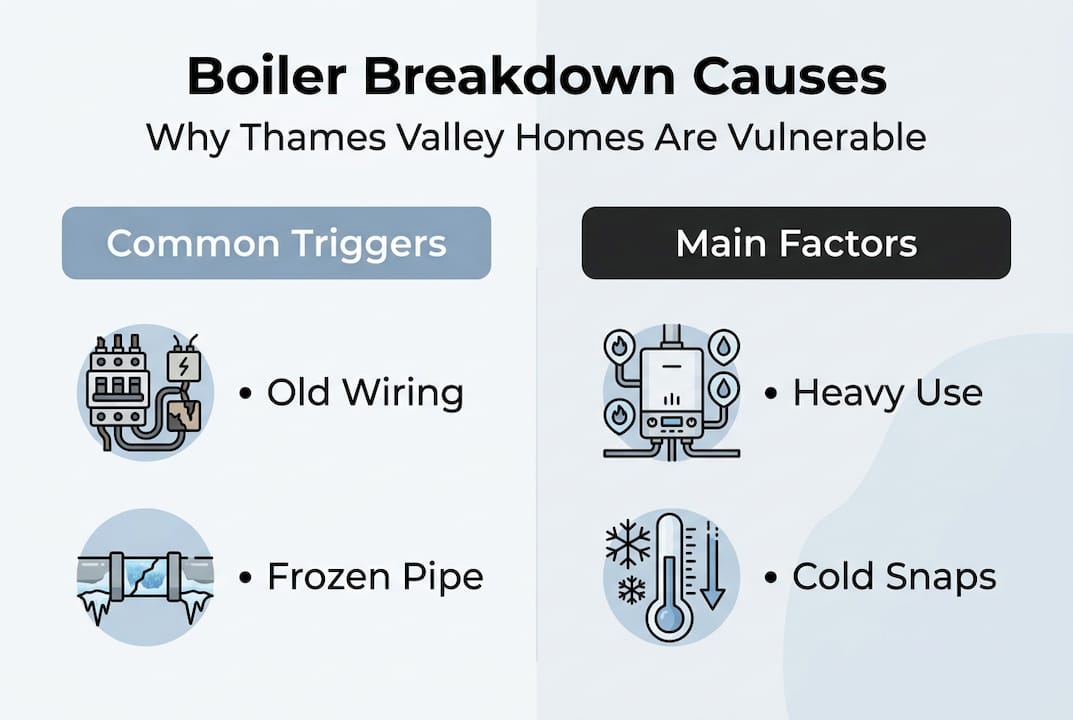
High winter usage compounds the problem. Thames Valley households run their heating harder and longer during cold months, and a boiler that copes fine in October can struggle badly by January.
Here is a breakdown of typical repair costs to give you a realistic picture:
| Repair type | Typical cost range |
|---|---|
| Annual boiler service | £70 to £110 |
| Pressure or thermostat fix | £100 to £200 |
| Diverter valve replacement | £150 to £300 |
| Printed circuit board (PCB) | £200 to £400+ |
| Full boiler replacement | £1,500 to £3,500+ |
"Typical boiler repairs in the UK cost between £100 and £400, with more complex jobs such as PCB replacements pushing beyond that. Annual servicing, by contrast, costs £70 to £110 and prevents the majority of breakdowns from occurring in the first place."
For Thames Valley homeowners, investing in central heating repairs before a full breakdown is nearly always the more affordable path. Waiting until the system fails completely tends to mean emergency callout rates and the possibility of replacing components that could have been saved with earlier attention.
Safe DIY fixes and when to call a professional
Once you know what is wrong, the next step is acting safely. Some fixes genuinely are within reach for a careful homeowner. Others are strictly off-limits.
Here are the steps you can safely take yourself:
- Repressurise the boiler. If your pressure gauge reads below 1 bar, locate the filling loop (a silver or grey braided hose beneath the boiler), open both valves slowly until the gauge reaches 1.5 bar, then close them. Check your boiler manual first.
- Thaw a frozen condensate pipe. Pour warm (not boiling) water over the external section of the pipe, usually a white plastic pipe exiting through an outside wall. Once thawed, reset the boiler.
- Bleed radiators. If radiators are cold at the top but warm at the bottom, trapped air is the cause. Use a radiator key to open the bleed valve until water appears, then close it and check the boiler pressure afterwards.
These safe DIY fixes are straightforward, but they have clear limits. You should never open the boiler casing, attempt to repair the gas valve or burner, or try to fix a leak inside the unit. Gas work is legally restricted to Gas Safe registered engineers, and attempting it yourself is both dangerous and illegal.
Call a Gas Safe engineer immediately if you notice:
- A gas smell anywhere near the boiler
- A yellow or orange flame instead of blue
- Sooty or black marks around the boiler casing
- Carbon monoxide alarm activation
- A persistent leak that does not stop after isolating the water supply
Pro Tip: Fit at least one carbon monoxide detector on every floor of your home, and place one within three metres of the boiler. Carbon monoxide is odourless and colourless, and a detector is your only reliable warning. You can book a boiler service or repair to have a qualified engineer check your system and confirm everything is operating safely.
Preventing future breakdowns and long-term solutions
Fixing today's breakdown is vital, but preventing tomorrow's is just as important. A little forward planning saves a great deal of money and stress.
Routine maintenance is the single most effective thing you can do. Annual servicing prevents the majority of boiler breakdowns, yet half of UK homeowners skip it entirely. That statistic is worth sitting with. Skipping a £90 service to save money often leads directly to a £300 repair six months later.
Here are the maintenance habits that make a real difference:
- Book an annual boiler service every year, ideally in late summer before the heating season begins
- Check boiler pressure monthly and repressurise if it drops below 1 bar
- Bleed radiators at the start of each winter to clear trapped air
- Insulate external condensate pipes before cold weather arrives
- Flush the system every few years to remove sludge and corrosion that reduces efficiency
- Test your thermostat and timer settings at the start of the heating season
Signs your boiler may need replacing rather than repairing include being over ten years old, requiring repairs more than once a year, producing less heat despite running constantly, and showing error codes that keep returning after fixes. At that point, the cost of repeated repairs often exceeds the cost of a new, efficient unit within two or three years.
Pro Tip: If your boiler is approaching eight or nine years old, start planning for replacement now rather than waiting for a complete failure. Replacing on your own schedule means you can compare quotes calmly, choose the right model, and avoid paying emergency installation rates in the middle of January.
For urgent situations that cannot wait, booking an emergency engineer quickly is the safest course of action.
Why most boiler breakdown advice misses Thames Valley realities
Most boiler breakdown guides are written for a generic UK audience, and that is where they fall short. They tell you to repressurise your boiler and call a Gas Safe engineer, which is correct, but they rarely account for the specific pressures Thames Valley homeowners face.
This region gets cold fast and stays cold. A frozen condensate pipe at 11pm on a Tuesday is not a morning job. Older Thames Valley properties often have systems that have been modified, extended, and bodged over decades, meaning a single fault can have multiple underlying causes that a generic checklist will miss entirely.
Our experience working across the Thames Valley has taught us that the homeowners who handle breakdowns best are the ones who already have a trusted engineer's number saved and a rough understanding of their system before anything goes wrong. Reading local emergency heating advice specific to this region gives you a genuine advantage over generic guidance.
The practical wisdom here is simple: do not wait for a crisis to start thinking about your heating. Know your boiler's age, keep the pressure in range, and have a plan.
How to get reliable emergency help in Thames Valley
When your boiler breaks down on a cold night, you need a local team that responds quickly and does not charge you just for showing up.

At 999Plumber.co.uk, we cover the Thames Valley 24 hours a day, seven days a week, with no call-out charges and a no fix no fee approach that means you only pay when the problem is solved. Whether you need central heating repairs for a struggling system or a full emergency response, our Gas Safe engineers are ready to help. You can book online in minutes, or browse our full range of 24hr plumbing and heating services to find the right solution for your home. Fast, local, and straightforward.
Frequently asked questions
What is the most common cause of boiler breakdowns?
Low pressure, leaks, and frozen condensate pipes are the most frequent reasons Thames Valley boilers fail, particularly during cold weather spells.
Can I fix a boiler breakdown myself?
You can safely repressurise the system, thaw a frozen pipe, or bleed radiators, but you should never open the boiler casing. Call a Gas Safe engineer for leaks or persistent faults.
How much does boiler repair cost in Thames Valley?
Typical repairs range from £100 to £400 or more, while annual servicing costs between £70 and £110 and prevents most faults from developing.
How can I prevent boiler breakdowns?
Annual servicing is the most effective prevention, yet half of UK homeowners skip it. Regular pressure checks and radiator bleeding also make a significant difference.
When should I replace my boiler instead of repair it?
If your boiler is over ten years old or breaking down repeatedly, replacement is usually more cost-effective than continuing to fund ongoing repairs.