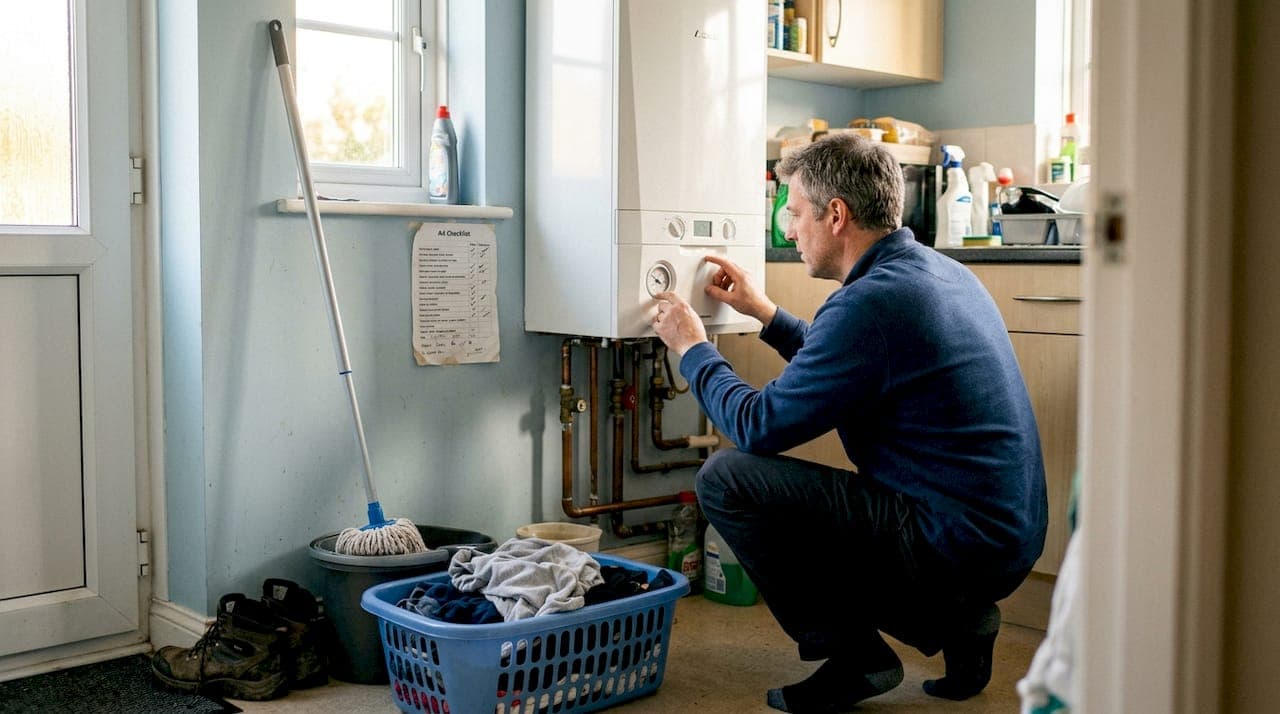
Your boiler works hardest during the coldest months, yet most homeowners only think about it when something goes wrong. A missed annual service can quietly drain your energy budget, increase the chance of a breakdown, and in the worst cases, create a genuine safety risk. Serviced boilers run 10-15% more efficiently than neglected ones, which adds up fast over a Thames Valley winter. This guide gives you a complete, practical checklist covering everything from monthly visual checks you can do yourself to what a professional engineer should inspect each year.
Table of Contents
- Why a boiler maintenance checklist matters
- The step-by-step boiler maintenance checklist
- Spotlight: Oil vs gas boiler checks in Thames Valley
- How often and when to carry out boiler maintenance
- Preparing for your next professional boiler service
- The truth about boiler maintenance that most guides miss
- Get expert boiler care in the Thames Valley
- Frequently asked questions
Key Takeaways
| Point | Details |
|---|---|
| Annual professional check | A yearly inspection by a Gas Safe or OFTEC engineer is vital for safety, efficiency, and warranty. |
| DIY routine tasks | Simple monthly checks help spot issues early but do not replace a professional service. |
| Gas vs oil differences | Oil boiler owners need to include tank and pipe inspections, with rural homes especially at risk. |
| Seasonal timing matters | Schedule your service in spring or summer to avoid emergency call-outs and winter delays. |
| Keep records | Save service reports to support insurance claims, guarantees, and household resale value. |
Why a boiler maintenance checklist matters
Skipping your annual boiler service feels harmless until it isn't. The costs creep in gradually: slightly higher gas bills, a radiator that never quite gets warm, and then one freezing January morning, no heating at all. A structured checklist removes the guesswork and keeps you ahead of those problems.
The financial case is straightforward. A well-maintained boiler uses less fuel to produce the same heat. Over a full heating season, that efficiency gap between a serviced and unserviced boiler can translate to a meaningful saving on your energy bills. Compare that to the cost of an emergency call-out, which can easily run into hundreds of pounds, and the maths strongly favour routine care.
Safety is the other side of the equation. Boilers that aren't regularly checked can develop flue blockages or combustion faults that produce carbon monoxide, a colourless and odourless gas that is genuinely dangerous. This isn't a remote risk; it's a documented consequence of neglect.
There are also practical implications for your home insurance and boiler warranty. Many policies require evidence of annual servicing. Without it, a claim following a breakdown could be rejected.
"Routine maintenance is not an optional extra. It's the single most effective thing a homeowner can do to protect their heating system."
Despite all this, 22% of UK households skip their annual boiler service, most commonly citing cost as the reason. The irony is that skipping the service almost always costs more in the long run. If you've ever dealt with an unexpected heating failure, our heating repair guide explains what to do and what to expect.
Key risks of skipping your annual boiler service:
- Higher energy bills from reduced combustion efficiency
- Increased breakdown risk, especially during peak winter demand
- Carbon monoxide hazards from unchecked flue or burner faults
- Voided warranty or insurance due to lack of service records
- Shorter boiler lifespan, meaning earlier and costlier replacement
The step-by-step boiler maintenance checklist
Not every task on this checklist requires a professional. Some are simple monthly checks any homeowner can carry out. Others must be done by a qualified engineer. Knowing the difference saves you time and keeps you safe.
Monthly homeowner checks:
- Check boiler pressure. Your pressure gauge should sit between 1 and 1.5 bar when the system is cold. If it's below 1, the system needs topping up via the filling loop.
- Look for visible leaks. Check around the boiler casing, pipes, and radiator valves for any signs of dripping or corrosion.
- Test your carbon monoxide alarm. Press the test button. If you don't have one fitted near your boiler, get one immediately.
- Check radiators for cold spots. Cold patches at the top of a radiator usually mean trapped air, which you can fix by bleeding the radiator with a bleed key.
- Keep the boiler area clear. Ensure there's no clutter blocking ventilation around the unit.
Annual professional service tasks:
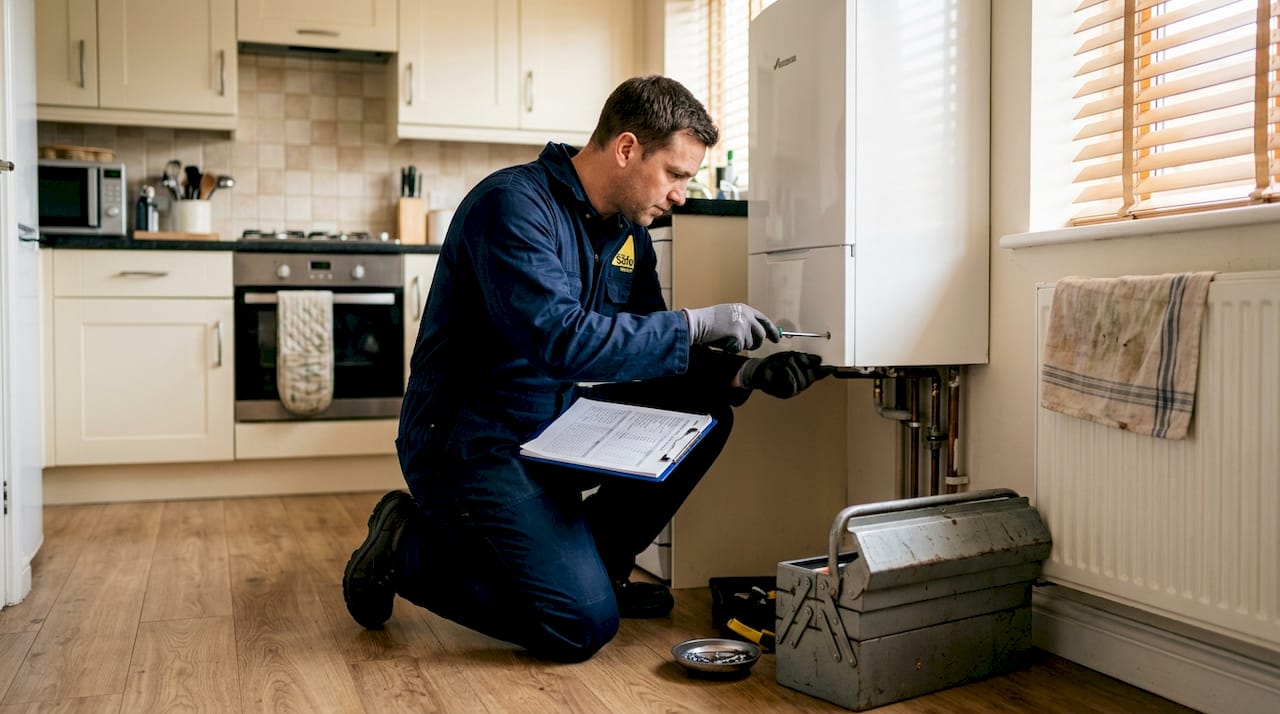
A Gas Safe or OFTEC engineer will carry out a visual inspection, flue integrity check, combustion analysis, internal cleaning, safety device testing, and a full pressure assessment. This is not something to replicate at home.
Pro Tip: Bleed your radiators before topping up the boiler pressure. Bleeding releases trapped air, which lowers system pressure, so doing it first means you only top up once.
| Task | Who does it | Frequency |
|---|---|---|
| Pressure check | Homeowner | Monthly |
| Bleed radiators | Homeowner | As needed |
| CO alarm test | Homeowner | Monthly |
| Flue inspection | Qualified engineer | Annually |
| Combustion analysis | Qualified engineer | Annually |
| Full safety check | Qualified engineer | Annually |
For a clearer picture of what a qualified professional actually does during a visit, the heating engineer guide is worth reading before you book.
Spotlight: Oil vs gas boiler checks in Thames Valley
The Thames Valley is a mixed region. Towns like Reading, Oxford, and Slough are predominantly on mains gas, while rural areas around the Chilterns, the Vale of White Horse, and parts of West Berkshire rely heavily on oil-fired heating. The type of boiler you have changes what your maintenance checklist looks like.
Gas boilers are the most common across the region. They connect directly to the mains supply, so there's no storage tank to worry about. Your annual service must be carried out by a Gas Safe registered engineer. No exceptions.
Oil boilers require additional attention. The boiler itself needs servicing by an OFTEC registered engineer, but the oil storage tank and supply lines also need regular inspection. Tanks can corrode, develop leaks, or accumulate sludge that blocks the burner. In rural Thames Valley properties, a neglected oil tank is one of the most common causes of mid-winter heating failure.
| Feature | Gas boiler | Oil boiler |
|---|---|---|
| Certification required | Gas Safe | OFTEC |
| Storage tank check | Not applicable | Annual |
| Supply line inspection | Not applicable | Annual |
| Common in Thames Valley | Urban and suburban | Rural areas |
| Fuel delivery needed | No | Yes |
Key tips for oil boiler owners:
- Book your service in summer. OFTEC engineers are in high demand from October onwards.
- Keep the tank area clear. Overgrown vegetation can hide leaks and makes inspection harder.
- Check fuel levels before winter. Running out of oil mid-season is entirely avoidable.
- Look for staining around tank joints. Dark patches or oily smells suggest a slow leak.
Whether you're in Reading or a rural village near Newbury, our boiler repairs service covers the full Thames Valley area for both gas and oil systems.
How often and when to carry out boiler maintenance
Timing your maintenance correctly is almost as important as doing it at all. A boiler serviced in August is ready for winter. One serviced in December, if you can even get an appointment, has already been running hard for weeks without a check.
Recommended schedule:
- Monthly: Visual inspection, pressure check, CO alarm test.
- Every autumn: Bleed radiators, check thermostatic radiator valves, test the programmer and thermostat.
- Annually (ideally late spring to summer): Full professional service by a Gas Safe or OFTEC engineer.
"Book your service in summer to avoid the winter rush. Engineers are far more available, and any faults found can be fixed before you actually need the heating."
The logic here is simple. Engineers are busy from October through February. If you book in June or July, you get a wider choice of appointment times, often a shorter wait, and any parts needed can be ordered without urgency. A fault found in summer is a minor inconvenience. The same fault found in January is an emergency.
Pro Tip: Set a recurring calendar reminder for the same week each year. Treat your boiler service like an MOT. It's not optional, and leaving it too late creates unnecessary stress.
For ongoing heating performance between services, keeping an eye on your central heating repairs needs means small issues don't become expensive ones.
Monthly checks take less than five minutes. They won't replace a professional service, but they will catch obvious problems early, like a pressure drop that signals a slow leak, or a radiator that's losing heat efficiency.
Preparing for your next professional boiler service
A professional service is only as thorough as the access you give the engineer. A little preparation beforehand means the visit goes smoothly and nothing gets missed.
Before the engineer arrives:
- Clear the area around the boiler. Remove any stored items, cleaning products, or clutter within at least half a metre of the unit.
- Locate your boiler manual. If you've lost it, search the manufacturer's website using the model number on the boiler casing.
- Note any recent issues. Strange noises, pressure drops, or uneven heating are all worth mentioning. Write them down so you don't forget on the day.
- Ensure access to all radiators. The engineer may need to check each one, so clear furniture blocking valves if possible.
Questions to ask your engineer:
- Is the boiler operating within safe parameters?
- Are there any parts showing signs of wear that should be replaced soon?
- Is the flue clear and correctly sealed?
- What's the expected remaining lifespan of this unit?
A professional service costs between £70 and £180 and typically takes 30 to 60 minutes. That's a reasonable investment for the peace of mind and efficiency gains it delivers.
Always ask for a written service record. Keep it with your home documents. If you ever need to make an insurance claim or sell the property, this paperwork is valuable evidence of responsible maintenance.
Pro Tip: Take a photo of your boiler's model number and serial number and save it to your phone. You'll need it if you ever have to order parts or call for emergency repair planning support.
The truth about boiler maintenance that most guides miss
Most boiler maintenance articles give you a list and leave you to it. The list is useful. But the real problem isn't that homeowners don't know what to do. It's that they keep putting it off.
The 22% who skip annual servicing due to cost aren't being reckless. They're making a short-term calculation that feels rational in the moment. What they rarely factor in is the actual cost of a breakdown: the emergency call-out fee, the parts, the days without heating, and the stress of managing it all in the middle of winter.
In the Thames Valley, where winters are damp and cold rather than dramatic, it's easy to underestimate how much you depend on your heating until it fails. The boilers that cause the most problems aren't ancient units. They're mid-age systems that were almost maintained, almost serviced, almost fine.
The checklist in this guide works. But it only works if you actually follow it. Understanding what heating engineers do during a service visit can help make the annual appointment feel less like an expense and more like the sensible investment it genuinely is.
Get expert boiler care in the Thames Valley
Knowing your checklist is one thing. Having a reliable engineer to back you up is another. At 999Plumber.co.uk, we provide fast, professional boiler servicing and repairs across the Thames Valley, with no call-out charges and a no fix no fee promise.

Whether you need a routine annual service or suspect something isn't quite right with your heating, our Gas Safe and OFTEC registered engineers are available 24/7. Book your boiler repairs and servicing appointment today, or explore our full range of central heating repairs to keep your home warm and safe all year round. Simple booking, experienced engineers, and genuine local knowledge across the region.
Frequently asked questions
What should a boiler maintenance checklist include?
A complete checklist covers monthly visual checks, pressure monitoring, radiator bleeding, CO alarm testing, and an annual Gas Safe or OFTEC engineer inspection covering flue, combustion, and safety devices.
How often should you have your boiler professionally serviced?
Your boiler should be professionally serviced annually to maintain safety, efficiency, and compliance with most manufacturer warranties and home insurance policies.
How much does a professional boiler service cost?
A typical service costs between £70 and £180 and takes between 30 and 60 minutes, making it one of the most cost-effective home maintenance investments available.
What happens if I skip annual boiler servicing?
Skipping your service risks breakdowns, higher bills, reduced efficiency, and could void your boiler warranty or home insurance cover in the event of a claim.
Who should service my oil or gas boiler in Thames Valley?
Gas boilers must be serviced by a Gas Safe registered engineer; oil boilers need OFTEC registered professionals, particularly for tank and supply line inspections in rural Thames Valley properties.