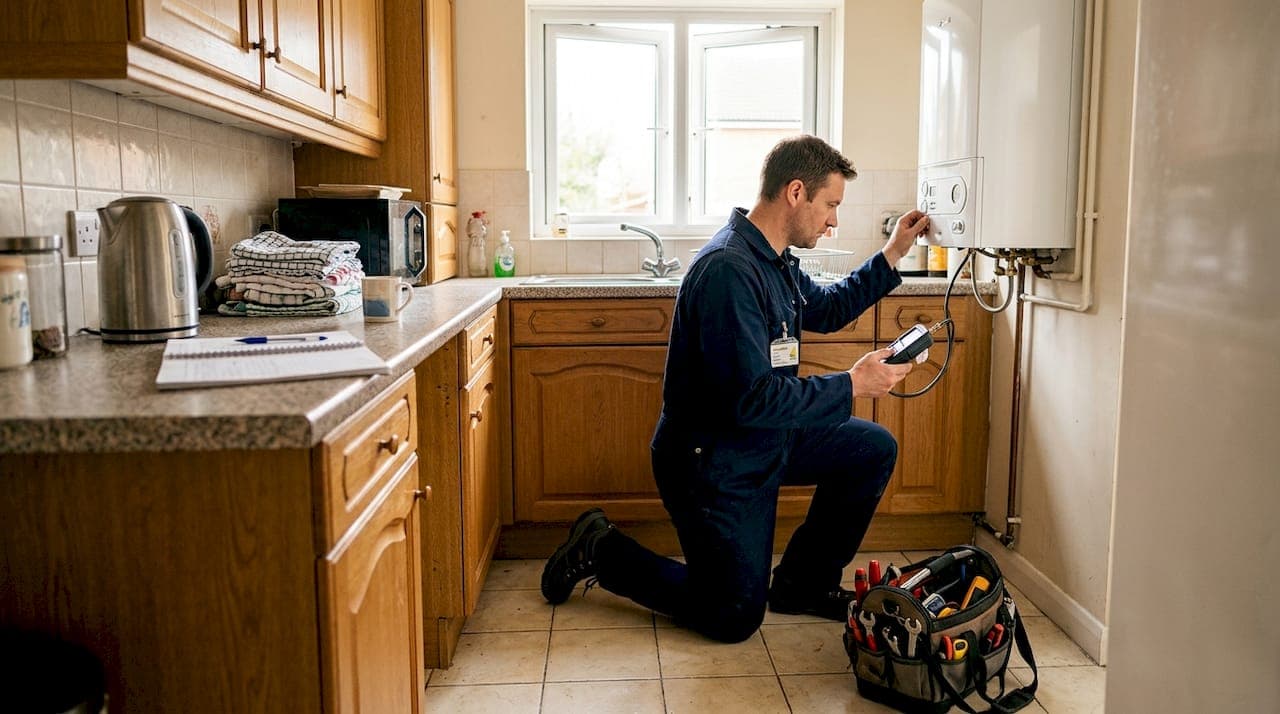
TL;DR:
- Around 20% of UK gas appliances are dangerous, posing risks of deadly carbon monoxide poisoning. Only Gas Safe registered engineers are qualified and legal to work on domestic gas systems in the UK. Regular professional servicing and verification of credentials are essential for safety, insurance, and compliance.
Around 1 in 5 gas appliances tested in UK homes are found to be dangerous, and carbon monoxide claims roughly 20 lives every year in England and Wales. Most of those deaths are entirely preventable. The frightening part is that faulty gas appliances give no warning: no smell, no visible leak, no alarm unless you have the right detector fitted. For homeowners across the Thames Valley, the difference between a safe home and a hazardous one often comes down to a single decision: whether the engineer working on your heating system holds a valid Gas Safe registration. This article walks you through what that means, what these engineers actually do, and how to choose the right one.
Table of Contents
- What is a Gas Safe engineer and why are they legally required?
- Core responsibilities in domestic heating and gas systems
- Safety mechanics: Preventing carbon monoxide danger
- Choosing a Gas Safe engineer for Thames Valley homes: What to check and what it costs
- Beyond compliance: Why expert verification and annual servicing are non-negotiable
- Connect with certified Gas Safe engineers in Thames Valley
- Frequently asked questions
Key Takeaways
| Point | Details |
|---|---|
| Legal necessity | Only Gas Safe registered engineers are permitted by law to work on domestic gas systems. |
| Safety checks | Annual servicing and rigorous safety tests protect your home from carbon monoxide risks. |
| Credential verification | Always inspect Gas Safe ID cards and online registration before hiring any engineer. |
| Transparent costs | Expect standard costs for boiler installation and servicing; always request certification. |
| Local access | Thames Valley homeowners can connect with certified experts for compliant and 24/7 service. |
What is a Gas Safe engineer and why are they legally required?
A Gas Safe engineer is a professional who has been assessed, certified, and registered to work legally on gas appliances and pipework in the UK. The Gas Safe Register replaced CORGI in 2009 and is overseen by the Health and Safety Executive. Every engineer on the register has demonstrated competence in specific categories of gas work, and that competence is not assumed to last forever.
Registration must be renewed annually, and engineers undergo formal reassessments every five years to confirm their skills remain current. This matters because gas technology, regulations, and safety standards evolve. An engineer who qualified a decade ago and never updated their training may not meet today's requirements.
For Thames Valley homeowners, the legal picture is clear. Under the Gas Safety (Installation and Use) Regulations 1998, only a Gas Safe registered engineer may install, service, or repair gas appliances in a domestic property. Hiring an unregistered individual is not just risky; it is illegal. If something goes wrong, your home insurance may be void, and you could face prosecution.
Here is a quick overview of what registration involves:
| Requirement | Detail |
|---|---|
| Initial qualification | NVQ Level 3 or equivalent, plus ACS assessments |
| Registration renewal | Every 12 months |
| Competency reassessment | Every 5 years |
| Regulatory oversight | Health and Safety Executive (HSE) |
| Work categories | Specific to each engineer's assessed skills |
Before any work begins, you are entitled to ask the engineer for their Gas Safe ID card. The card lists the specific appliances and tasks they are qualified to handle. If boiler servicing is not listed, they cannot legally carry it out. You can also verify registration directly on the Gas Safe Register website using the engineer's licence number.
For homeowners in Newbury and surrounding areas, boiler repairs in Newbury should always be carried out by a registered engineer. And if you are unsure what a routine visit should involve, our guide on boiler service safety covers the process in plain terms.
Remember: An unregistered engineer may charge less upfront, but the financial and legal consequences of using one can far outweigh any short-term saving.
Core responsibilities in domestic heating and gas systems
With the legal framework established, it is worth understanding what Gas Safe engineers actually do when they arrive at your property. Their work goes well beyond tightening a fitting or relighting a pilot light.
Boiler installation is one of the most involved tasks. A professional boiler installation includes pipework modifications, system flushing, commissioning, safety testing, and full compliance with the Gas Safety Regulations. Done properly, it takes several hours and involves multiple checks before the system is signed off.
Here is what a standard installation process looks like:
- Survey and system assessment
- Removal of the old boiler and safe capping of pipework
- Power flushing the system to remove sludge and debris
- Installation of the new unit and pipework modifications
- Commissioning and pressure testing
- Flue gas analysis and safety verification
- Handover documentation and registration of warranty
Pro Tip: Always request a power flush before a new boiler is fitted. Most manufacturers require evidence of a clean system to honour the warranty. Skipping this step can void your cover within months.
Annual servicing is not optional, even if your boiler seems to be running fine. A service involves checking combustion efficiency, inspecting the heat exchanger, testing safety devices, and confirming the flue is clear. Our boiler maintenance checklist gives a useful breakdown of what each visit should cover.
Repairs and system modifications are also within scope. If your boiler is losing pressure, making unusual noises, or failing to heat certain radiators, a Gas Safe engineer can diagnose and fix the fault. For a deeper look at common faults, the boiler breakdowns guide is a practical starting point.
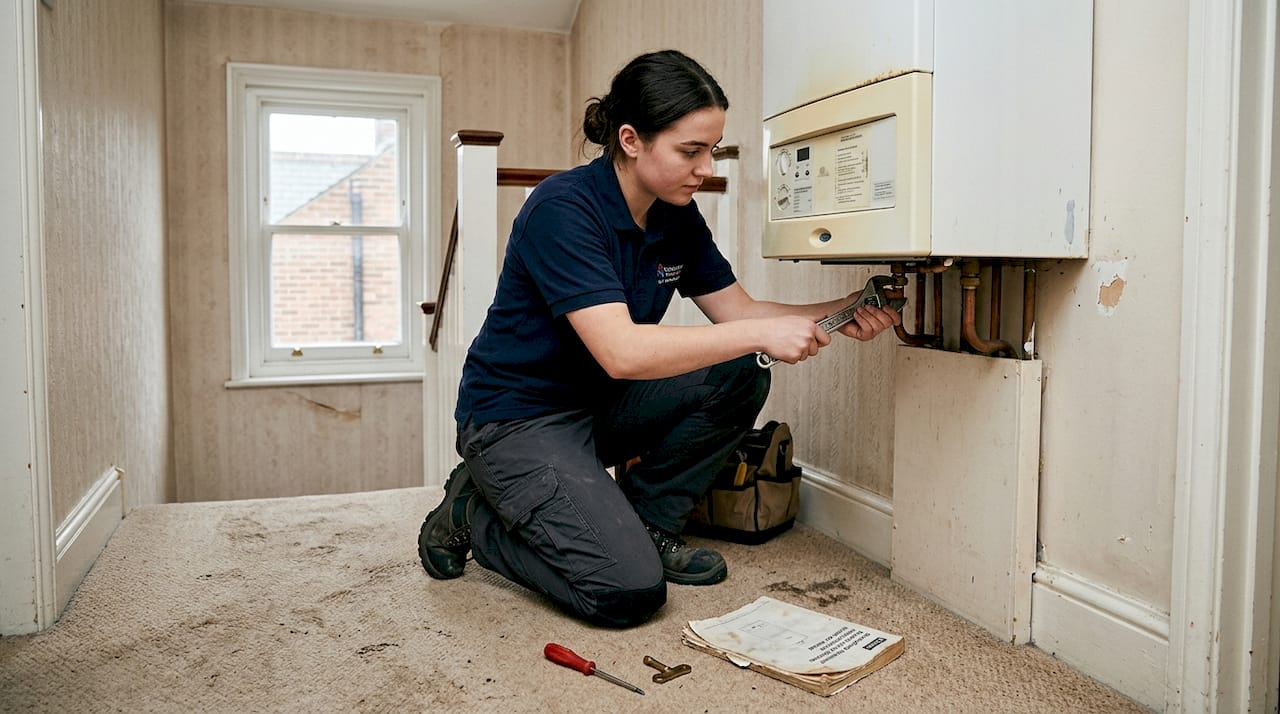
CP12 Gas Safety Certificates are issued after a formal inspection confirming all gas appliances are safe. Landlords are legally required to obtain one annually for every rented property. Homeowners are not legally obliged, but having one provides valuable evidence of compliance for insurance and property sale purposes. The importance of Gas Safe registration cannot be overstated when it comes to protecting your household.
| Task | Typical frequency | Legal requirement? |
|---|---|---|
| Boiler service | Annually | For landlords, yes |
| CP12 certificate | Annually | Landlords only |
| Boiler installation | As needed | Always Gas Safe |
| System flush | Before new install | Warranty dependent |
Safety mechanics: Preventing carbon monoxide danger
Carbon monoxide is produced when gas does not burn completely. It is colourless, odourless, and accumulates silently. Around 20 people die from CO poisoning in England and Wales each year, with 68% of those deaths occurring in autumn and winter when heating systems are under the most strain.
Gas Safe engineers use specific techniques to detect and prevent CO build-up:
- Gas tightness testing: Pressurising the pipework and monitoring for pressure drops that indicate a leak
- Flue gas analysis: Measuring the ratio of carbon monoxide to carbon dioxide in the boiler's exhaust to assess combustion quality
- Ventilation checks: Confirming that air supply to the boiler is adequate for safe combustion
- Electrical safety checks: Verifying that the boiler's controls and safety cut-outs are functioning correctly
- Visual inspection of the heat exchanger: Cracks here are a common cause of CO leaking into living spaces
Pro Tip: Chronic CO exposure at low levels causes symptoms that are easily mistaken for flu: headaches, fatigue, and nausea. If multiple people in your household feel unwell at the same time and improve when you leave the house, treat it as a CO emergency. Get everyone out and call the Gas Emergency line on 0800 111 999.
For NHS guidance on carbon monoxide poisoning, including symptoms and what to do, the information is clear and worth bookmarking. A CO alarm is an essential addition to any home with gas appliances, but it is not a substitute for annual professional checks.
Regular boiler servicing is the most reliable way to keep CO risk low. Engineers catch deteriorating components before they become dangerous, and that early intervention is what saves lives.
Choosing a Gas Safe engineer for Thames Valley homes: What to check and what it costs
Knowing the risks is one thing. Knowing how to find the right engineer is another. The process is straightforward if you follow a few clear steps.
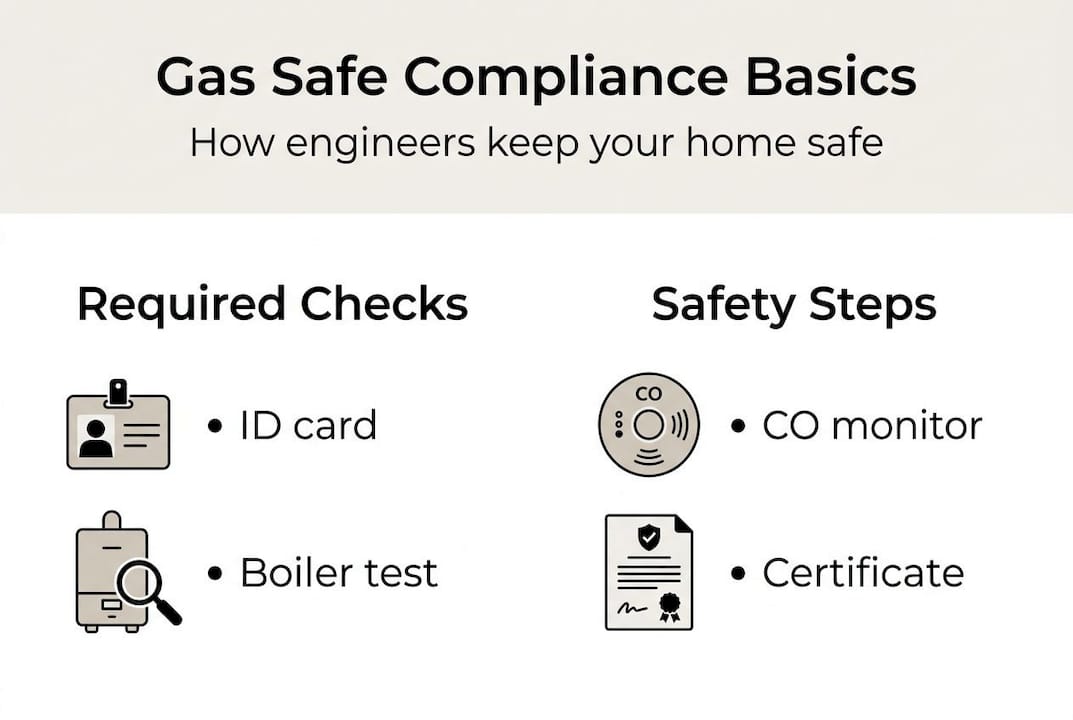
Always start by asking to see the engineer's Gas Safe ID card. Engineers are qualified for specific categories of work, and the card lists exactly what they are permitted to do. If the category for your appliance is not listed, they cannot legally carry out the work. Cross-reference the licence number on the Gas Safe Register website before any work begins.
Here is how to verify an engineer step by step:
- Ask for the Gas Safe ID card before work starts
- Note the licence number and expiry date
- Visit the Gas Safe Register website and enter the licence number
- Confirm the listed categories match the work required
- Check that the registration has not lapsed
Pro Tip: Always verify registration online, even if the engineer comes recommended by a neighbour. Registration can lapse without the homeowner knowing, and a lapsed card is not valid.
For boiler servicing safety and peace of mind, working with a local Thames Valley firm that offers 24/7 availability means you are not left waiting when something goes wrong in January.
Typical costs in 2026 for the Thames Valley area:
| Service | Typical cost range |
|---|---|
| Annual boiler service | £45 to £120 |
| New boiler installation | £1,800 to £4,500 |
| Gas Safety check (CP12) | £60 to £100 |
Modern installations often include smart controls, which can reduce energy use and give you remote access to your heating. Confirm whether smart controls and warranty registration are included in any quote before you agree to proceed.
Beyond compliance: Why expert verification and annual servicing are non-negotiable
Here is something most homeowners do not realise until it is too late: skipping the ID card check is not a minor oversight. It is the kind of decision that can void your home insurance, expose you to legal liability, and leave you with no recourse if the work is substandard. We see it regularly across Thames Valley properties, and the pattern is always the same. A homeowner assumed the engineer was registered because they seemed professional and quoted a fair price.
Annual servicing is equally misunderstood. Many people treat it as a box-ticking exercise. In reality, A-rated boilers serviced annually can save up to 30% on energy bills compared with poorly maintained equivalents, and a missed service can invalidate your manufacturer's warranty entirely. The engineer who spots a cracked heat exchanger during a routine visit is not just doing their job. They are preventing a potential CO incident.
Thames Valley homeowners are fortunate to have access to local Gas Safe engineers who operate around the clock. Use that access. Book your annual service, protect your home and budget, and never assume that because your heating is working, it is working safely. Those are two very different things.
Connect with certified Gas Safe engineers in Thames Valley
If this article has prompted you to check when your boiler was last serviced, or to question whether the engineer you used was properly registered, that instinct is worth acting on.

At 999Plumber.co.uk, our Gas Safe engineers cover the Thames Valley region 24 hours a day, seven days a week. Whether you need central heating repairs, a full boiler repair service, or simply want to book an annual safety check, we make the process simple. No call-out charges, no fix no fee, and a straightforward booking process. You can book an emergency plumber online in minutes, with a certified engineer dispatched to your property promptly. Every job is completed to Gas Safe standards, with full documentation provided.
Frequently asked questions
What categories should I check on a Gas Safe engineer's ID card?
Always verify that the specific work categories listed on the card match the appliances or tasks involved. Categories cover boilers, cookers, pipework, and more, and an engineer is only legally permitted to work within their listed categories.
How often does my boiler need servicing for safety and warranty?
Annual servicing is required to maintain warranty validity and meet safety obligations. CP12 certificates are mandatory for landlords every year, and homeowners benefit from the same frequency for efficiency and early fault detection.
What is a CP12 Gas Safety Certificate and who needs it?
A CP12 is a formal record confirming that all gas appliances in a property have been inspected and found safe. It is legally mandatory for landlords on an annual basis, and strongly recommended for homeowners.
How much should a boiler installation or service cost in Thames Valley?
Expect to pay £45 to £120 for servicing, £1,800 to £4,500 for a new installation, and £60 to £100 for a Gas Safety check, depending on the engineer and scope of work.
Why is carbon monoxide so dangerous and how do engineers prevent leaks?
Carbon monoxide is odourless and can be fatal before symptoms are recognised. Engineers prevent leaks through tightness testing and flue gas analysis during every annual safety inspection.