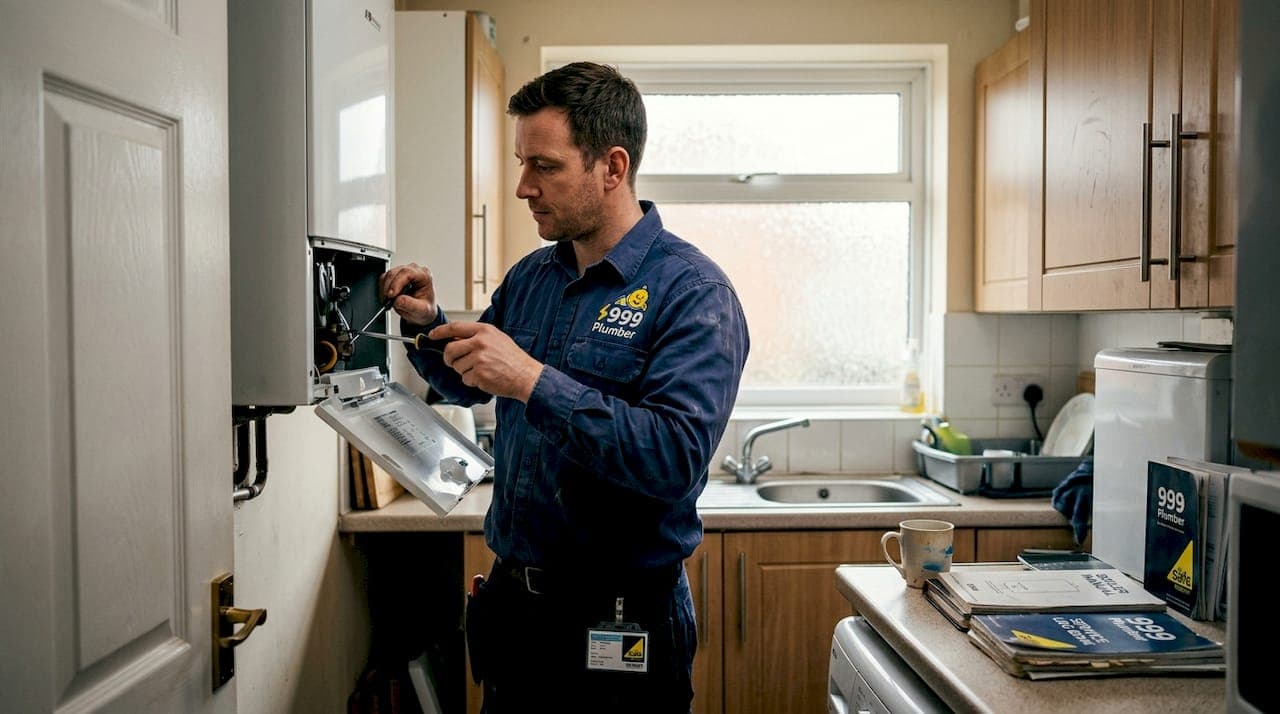
TL;DR:
- Gas Safe certification is legally required and ensures safe, reliable gas work in homes.
- Hiring unregistered plumbers risks gas leaks, explosions, carbon monoxide poisoning, and insurance issues.
- Always verify credentials by checking the Gas Safe ID card and official register before work begins.
Most homeowners wouldn't think twice about hiring a plumber, assuming that a spanner is a spanner and one trade is much like another. But when it comes to gas work, that assumption can put your household in serious danger. Gas appliances, pipes, and fittings require specialist knowledge backed by legal certification. Hiring someone without Gas Safe registration isn't just risky; it's potentially illegal and can void your home insurance entirely. In this guide, we'll walk you through exactly why Gas Safe certification matters, what the real consequences of cutting corners look like, and how to verify credentials before any engineer sets foot in your home.
Table of Contents
- Understanding Gas Safe certification and its importance
- Risks of hiring an uncertified plumber: Safety and legal consequences
- The benefits of choosing a Gas Safe plumber for your home
- How to verify a plumber's Gas Safe credentials
- Why shortcuts on safety never pay: A plumber's perspective
- Trust Gas Safe plumbers for emergency services in the Thames Valley
- Frequently asked questions
Key Takeaways
| Point | Details |
|---|---|
| Legal must-have | Gas Safe certification is required for any gas work in British homes to comply with the law. |
| Safety first | Certified plumbers prevent leaks, carbon monoxide, and fire risks, keeping your household safe. |
| Peace of mind | Choosing a Gas Safe plumber ensures robust emergency response and reliable maintenance. |
| Easy verification | Always check your plumber’s Gas Safe ID and registration before hiring for gas work. |
| False economy | Cutting corners with uncertified plumbers can lead to costly damage and legal issues later. |
Understanding Gas Safe certification and its importance
Gas Safe certification isn't simply a badge engineers collect to bolster their CV. It's a legally enforced framework managed by the Health and Safety Executive (HSE), designed specifically to protect homeowners from the invisible and often fatal dangers of improperly handled gas. The Gas Safe Register replaced CORGI registration in 2009 and has since been the only official licensing body for gas work across the United Kingdom.
Gas Safe registration is required by UK law for anyone working with gas appliances in your home. This isn't optional. An engineer must hold a valid Gas Safe licence and carry a Gas Safe ID card that lists the specific types of gas work they're qualified to carry out. Not every Gas Safe engineer is cleared for every job; the card details their competency categories, so a plumber registered for boiler work may not be qualified to work on gas cookers or fire installations.
Think of it like a driving licence. A person might be able to operate a car, but that doesn't mean they're licensed to drive a lorry. The same principle applies to gas work, and the stakes are considerably higher than a motoring offence.
Why does certification protect you specifically? A few critical reasons:
- Legal accountability: Registered engineers are bound by professional standards and can be investigated for unsafe work.
- Insurance validity: Most home insurance policies will not pay out for gas-related damage if the work was carried out by an unregistered engineer.
- Technical competency: Gas Safe engineers have passed rigorous assessments to prove they understand combustion, gas pressures, ventilation requirements, and safe installation procedures.
- Documented records: Gas Safe engineers issue certificates for completed work, giving you a paper trail for future sales, lettings, or insurance claims.
Our detailed breakdown of Gas Safe engineers across the Thames Valley explains how this works in practice for local homeowners.
| Feature | Gas Safe certified plumber | Unregistered plumber |
|---|---|---|
| Legal authorisation | Yes, by law | No |
| Gas Safe ID card | Carries one | Cannot produce one |
| Issues safety certificates | Yes | No |
| Covered by insurance | Yes | Typically no |
| Liable for unsafe work | Professionally accountable | Difficult to pursue |
| Annual competency checks | Required | None |
"If you wouldn't let someone operate on your child without medical qualifications, don't let an unqualified person work on the systems that keep your family safe at home."
For further guidance on choosing a plumber that meets safety standards in the Thames Valley, our blog offers a thorough walkthrough from start to finish.
Risks of hiring an uncertified plumber: Safety and legal consequences
With certification defined, let's examine the real-world risks and consequences of hiring an uncertified plumber. This isn't about scare tactics; it's about understanding what genuinely goes wrong when shortcuts are taken with gas.
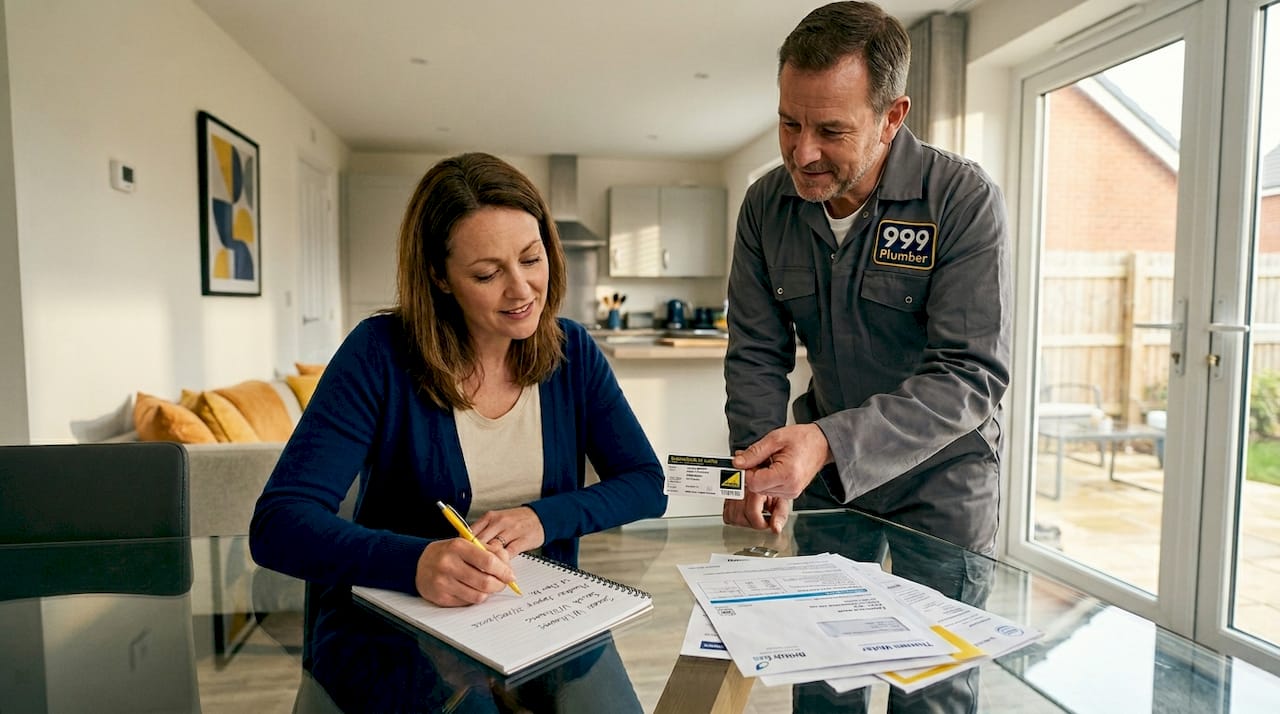
Gas safety breaches by unregistered plumbers have resulted in fines and serious incidents across the UK, including cases involving carbon monoxide poisoning, structural fires, and explosions. Carbon monoxide is colourless and odourless; by the time symptoms appear, occupants are often already in danger. A faulty boiler installation or an improperly sealed pipe joint can release this gas silently into your living space without any visible sign.
Here's what's genuinely at stake when you hire someone without Gas Safe registration:
- Gas leaks and explosions: Incorrect pipe fittings or pressure settings can cause dangerous gas accumulations in your home.
- Carbon monoxide poisoning: Poor combustion caused by improper installation leads to CO build-up, which kills silently.
- House fires: Improperly connected gas appliances near heat sources or with inadequate ventilation are a fire risk.
- Voided home insurance: If a claim arises from work done by an unregistered engineer, your insurer can refuse to pay out.
- Legal liability: As the homeowner, you carry responsibility for ensuring work on your property is completed by a qualified professional.
| Outcome | Gas Safe certified | Unregistered plumber |
|---|---|---|
| Gas leak risk | Minimised through tested procedures | Elevated due to lack of standards |
| Carbon monoxide risk | Controlled and assessed | Uncontrolled |
| Insurance payout | Supported | Likely refused |
| Legal responsibility | Shared with engineer | Falls on homeowner |
| Safety certificate issued | Yes | No |
If you've already hired an uncertified worker and you're concerned, follow these steps immediately:
- Stop using any gas appliances in the home.
- Open windows and ventilate affected rooms.
- Contact the National Gas Emergency Service on 0800 111 999.
- Call a Gas Safe registered engineer to inspect all work carried out.
- Document what work was done and by whom, in case insurance or legal questions arise.
Pro Tip: Before any engineer begins gas work, photograph their Gas Safe ID card and note the expiry date. It takes 30 seconds and could save you thousands.
If you ever face a sudden gas concern or suspect a leak, our emergency plumbing guide covers exactly what steps to take in those high-pressure moments. Understanding the true value of skilled plumbers also helps put the cost of quality work into proper perspective.
The benefits of choosing a Gas Safe plumber for your home
Having covered the risks, here are the direct benefits you'll enjoy by choosing a Gas Safe plumber. Beyond simply avoiding danger, working with a certified engineer brings genuine, tangible advantages that extend across safety, finances, and peace of mind.
Gas Safe plumbers offer higher safety standards and legal compliance, with faster and more reliable emergency responses compared to uncertified workers operating outside the regulatory framework. The difference shows up not just during the job, but in how your home performs over the months and years that follow.
Here's what you gain by always choosing a certified engineer:
- Full legal compliance: You're covered. The work meets UK standards, and you hold certificates to prove it.
- Insurance protection: Any gas-related claim will be supported rather than denied, protecting your property investment.
- Improved appliance efficiency: Correctly installed and maintained boilers and gas appliances run more efficiently, which saves you money on energy bills.
- Long-term reliability: Properly done gas work lasts. Shoddy installations create ongoing problems that cost far more to fix later.
- Access to qualified emergency response: Gas Safe engineers responding to emergencies have the skills to assess and resolve the situation safely, without escalating the risk.
For Thames Valley homeowners, the advantages of 24/7 availability are particularly valuable. A Gas Safe certified engineer who can respond at 2am during a heating failure is worth far more than a cheaper unregistered operative who isn't contactable after hours and can't legally sign off any gas work anyway.
Pro Tip: Book an annual gas safety check with a registered engineer even if nothing has gone wrong. Well-maintained systems consume less gas, are less likely to fail in winter, and keep your warranty and insurance valid. Most annual checks cost between £60 and £100, far less than an emergency repair or a replacement boiler.
One practical example worth considering: a Thames Valley homeowner whose boiler was improperly serviced by an uncertified tradesperson found themselves facing a full boiler replacement within 18 months because poor maintenance had damaged internal components. The saving of £40 on a cheaper service appointment ultimately cost over £2,500. Our boiler safety guide explains in detail how proper servicing prevents exactly that kind of avoidable cost.
Investing in certified expertise upfront is always the smarter financial decision when it comes to gas.
How to verify a plumber's Gas Safe credentials
Once you've decided on Gas Safe safety, here's how to ensure your chosen plumber meets those standards every time. Verifying credentials is straightforward, and it should become a habit before you approve any gas work in your home.
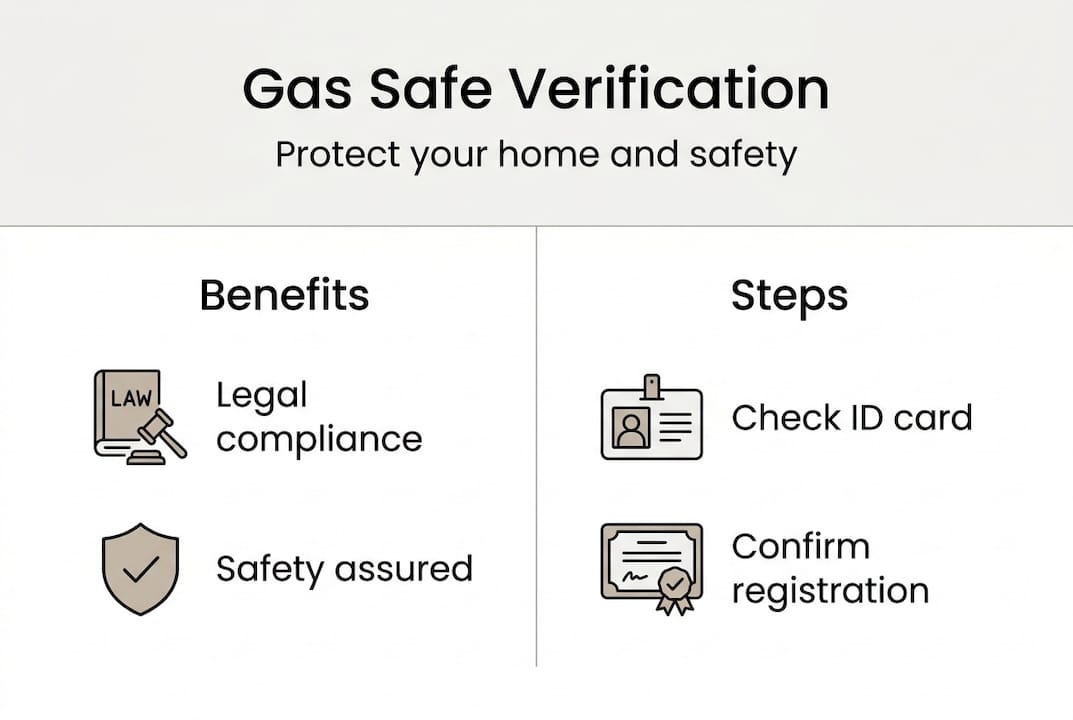
Gas Safe credentials are easily verifiable through official registers and ID cards, and no legitimate engineer will object to being asked. In fact, a professional who refuses or becomes defensive when asked for their Gas Safe card is almost certainly not registered and should be turned away immediately.
Follow this five-step checklist every time:
- Ask to see the Gas Safe ID card: Every registered engineer carries one. It shows their name, registration number, and the specific types of gas work they're authorised to carry out.
- Check the expiry date: Registration must be renewed annually. An expired card means they're no longer legally authorised.
- Verify on the official register: Visit the Gas Safe Register website and enter the engineer's ID number or postcode to confirm their registration is active and genuine.
- Match the work to their qualifications: Confirm the card shows competency in the specific job they'll be doing, whether that's boiler installation, gas pipe work, or appliance connection.
- Keep a copy for your records: Photograph or photocopy the card and file it alongside any certificates issued after the work is complete.
Beyond the checklist, there are a few key questions worth asking before the job begins:
- Are you Gas Safe registered for this specific type of work?
- Will you issue a safety certificate on completion?
- Is your registration current and renewable?
- Can I verify your registration number online before you start?
Pro Tip: Keep a folder, physical or digital, with all gas safety certificates, engineer registration details, and appliance manuals. This proves invaluable during property sales, remortgaging, and insurance claims, and saves considerable stress if a problem arises years later.
Understanding regular boiler servicing is closely connected to credential verification, because both habits protect your home against preventable risk. If you're evaluating Gas Safe qualifications across different service providers, it helps to understand what each category of registration actually covers before you book.
The verification process genuinely takes less than five minutes. Given what's at risk, those five minutes are among the best you'll invest in your home's safety.
Why shortcuts on safety never pay: A plumber's perspective
We've attended emergencies in the Thames Valley that shouldn't have happened. Time and again, the root cause traces back to a homeowner who chose the cheaper quote without checking credentials, or who trusted a general handyman to handle gas work that required specialist skills and certification.
All credible sources agree on this point without exception: there is no credible argument for using an unregistered engineer for gas work. The HSE's oversight of the Gas Safe Register exists precisely because the consequences of poor gas work aren't inconvenient; they're lethal.
The uncomfortable truth is that unregistered operatives often quote lower prices because they're cutting costs in ways that directly increase your risk. No training costs. No insurance premiums. No renewal fees. Every saving they make is a risk that transfers to you and your family.
We've seen it firsthand: a "quick and cheap" boiler connection turns into a condemned appliance, a carbon monoxide alarm triggered at midnight, and a family standing outside in January. The Gas Safe compliance standards we operate under aren't red tape. They're the product of decades of hard lessons about what goes wrong when gas work isn't done properly.
Reputable engineers, without exception, welcome Gas Safe checks. That openness is itself a signal of trustworthiness.
Trust Gas Safe plumbers for emergency services in the Thames Valley
If this article has made one thing clear, it's that Gas Safe certification isn't a formality — it's the foundation of safe, legal gas work in your home. When an emergency strikes, the last thing you want is to be searching for credentials while a gas smell fills your kitchen.

At 999Plumber.co.uk, every engineer we deploy is Gas Safe certified and available around the clock across the Thames Valley. Whether you need urgent central heating repairs, fast boiler repairs, or immediate assistance from our emergency plumbing service, we respond quickly, work safely, and leave you with full documentation. No call-out charges. No fix, no fee.
Frequently asked questions
How can I check if my plumber is Gas Safe certified?
Ask for their Gas Safe ID card and confirm their registration number on the official Gas Safe Register website before any gas work begins. Gas Safe credentials are publicly verifiable in seconds.
What happens if I use an unregistered plumber for gas work?
You risk voided home insurance, financial penalties, dangerous gas leaks, and personal legal liability if something goes wrong. Gas safety breaches by unregistered plumbers have led to serious incidents and prosecutions across the UK.
Is Gas Safe certification needed for all plumbing services?
Gas Safe registration is a legal requirement for any work involving gas appliances, pipes, or fittings, but it is not required for standard plumbing tasks such as fixing a leaking tap or replacing a radiator valve.
Can Gas Safe plumbers handle emergency situations quickly?
Yes. Gas Safe plumbers are trained to assess and respond to emergency gas situations safely and efficiently, including suspected leaks, boiler failures, and carbon monoxide concerns, minimising risk and resolving issues faster.