TL;DR:
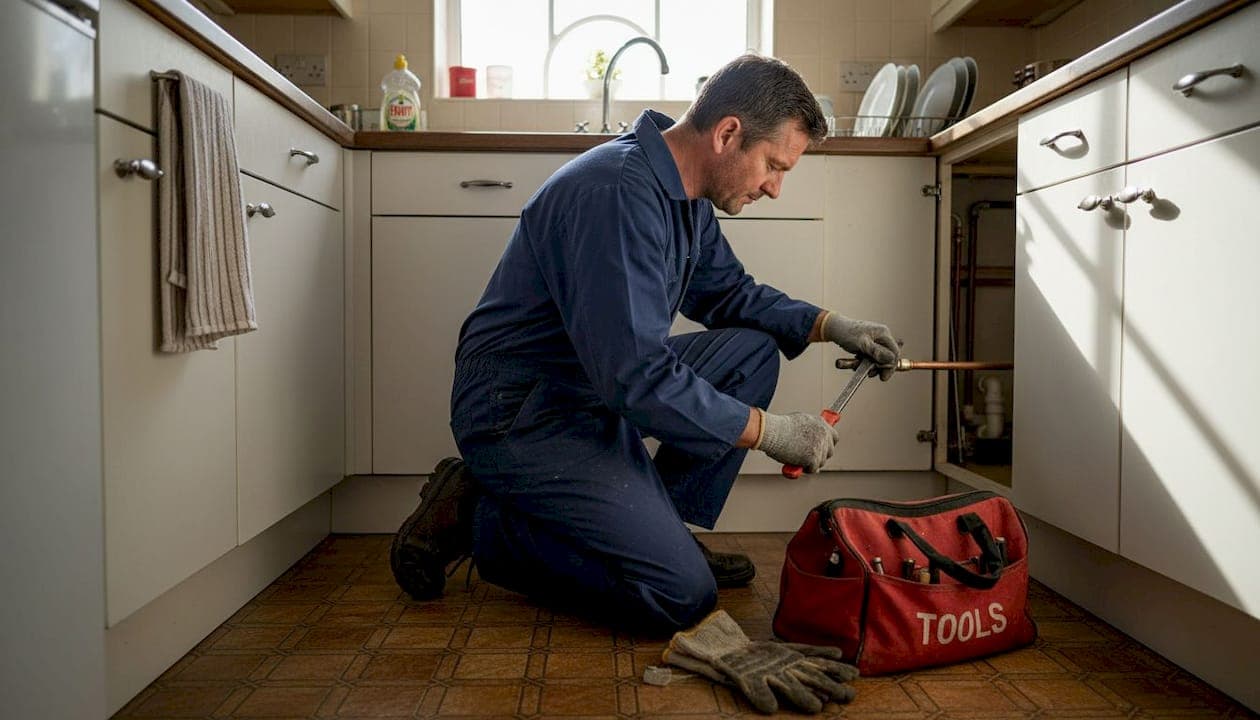
- Hiring certified plumbers ensures legal compliance, insurance validity, and quality work.
- Certification schemes like WaterSafe, WIAPS, and CIPHE verify professional competence and ongoing training.
- Using uncertified plumbers increases risks of insurance voidance, costly repairs, and regulatory fines.
Around 65% of UK homes experience a plumbing issue each year, yet many homeowners still open the door to the first tradesperson who answers the phone. In the Thames Valley, where older housing stock and hard water put extra strain on pipework, that gamble carries real consequences. Hiring someone without the right credentials can mean voided insurance, costly repeat repairs, and work that falls foul of building regulations. This article cuts through the confusion around plumber qualifications, explains exactly what certification means in practice, and shows you why it matters far more than you might expect.
Table of Contents
- What does it mean to be a certified plumber?
- The core benefits of hiring a certified plumber
- Legal and insurance advantages for homeowners
- Costs, risks, and long-term value: Certified versus uncertified plumbers
- Why expert credentials are worth every penny: Our view
- Connect with trusted, certified plumbers in the Thames Valley
- Frequently asked questions
Key Takeaways
| Point | Details |
|---|---|
| Certification ensures competence | Certified plumbers prove their skills through recognised professional schemes, giving you peace of mind. |
| Insurance depends on credentials | Hiring uncertified plumbers can void your insurance and leave you exposed if things go wrong. |
| Long-term value outweighs cost | Properly certified work prevents future repairs and protects your property's value. |
| Most UK homeowners prefer certification | A wide majority trust qualified professionals for reliable and safe plumbing solutions. |
What does it mean to be a certified plumber?
Many homeowners assume that any plumber who turns up with a van and a set of tools is somehow officially approved. That is not the case. Unlike gas work, where Gas Safe registration is a legal requirement, there is no mandatory UK-wide plumber licence. Certifications like WaterSafe and WIAPS are voluntary but remain the clearest signal of genuine competence.
Understanding the key schemes helps you ask the right questions before anyone touches your pipes.
- WaterSafe is the UK's national register of approved plumbing businesses. Members must meet Water Regulations and are inspected regularly.
- WIAPS (Water Industry Approved Plumber Scheme) is run by water companies and carries particular weight for work connected to the mains supply.
- CIPHE (Chartered Institute of Plumbing and Heating Engineering) is a professional body whose members hold recognised qualifications and commit to ongoing training.
- Gas Safe is legally required for any work on gas appliances or pipework. Always check the card, never just ask.
To verify any of the above, visit the relevant scheme's website and search by company name or registration number. Most take under two minutes to check.
Here is a quick comparison to clarify what each status actually means:
| Status | What it signals | Can you verify it online? |
|---|---|---|
| Gas Safe registered | Legal minimum for gas work | Yes, via gassaferegister.co.uk |
| WaterSafe approved | Meets Water Regulations | Yes, via watersafe.org.uk |
| WIAPS member | Water company approved | Yes, via approved scheme pages |
| CIPHE member | Professional body qualification | Yes, via ciphe.com |
| Unregistered | No verified standard | No |
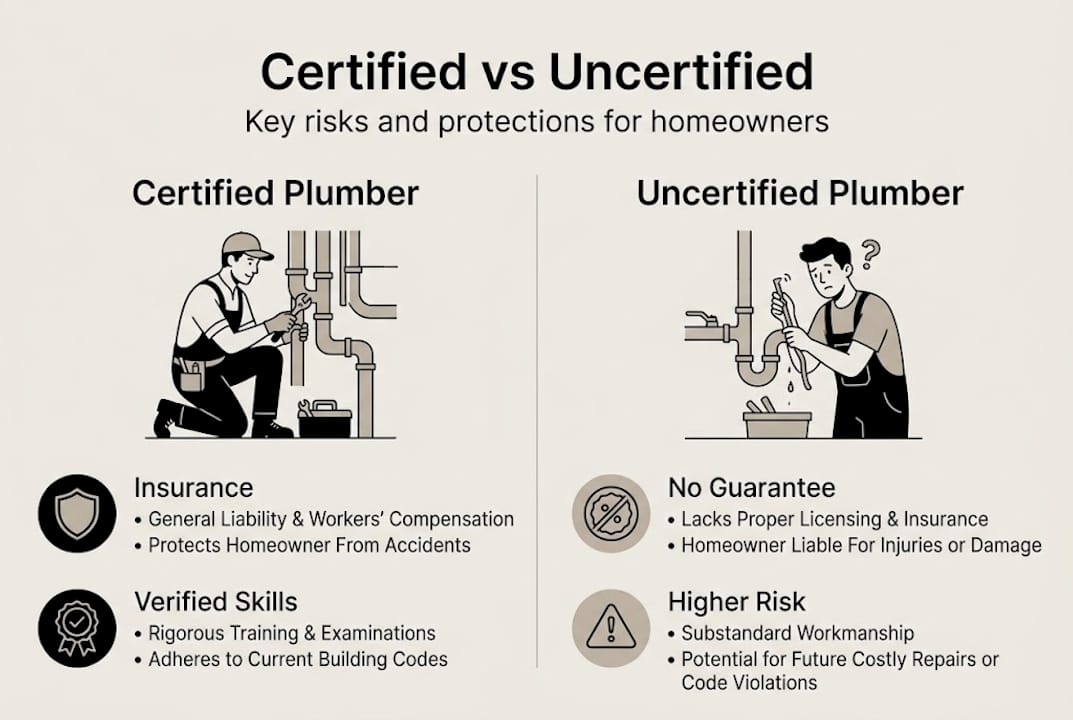
The gap between certified and uncertified is not just about paperwork. A certified plumber carries liability insurance, follows current building regulations, and produces documentation you can hand to your insurer or a future buyer. Reviewing plumbing certifications explained gives you a fuller picture of what to look for before committing to any job. When you understand the value of certified plumbers for Thames Valley properties specifically, the decision becomes straightforward.
The core benefits of hiring a certified plumber
With certification defined, the practical advantages become easy to see. The most compelling number is this: 91% of UK homeowners prefer to use a plumber who is officially vetted. That near-universal preference reflects lived experience, not just caution.
Here is a summary of the core benefits:
- Legal compliance: Certified plumbers work to current building regulations and Water Regulations, so the finished job is legitimate.
- Insurance protection: Insurers recognise approved work. Uncertified work may void your policy.
- Quality assurance: Registered professionals carry liability insurance and often offer a workmanship guarantee.
- Reduced repeat callouts: Correctly installed components last longer and fail less often.
- Resale confidence: Buyers and solicitors increasingly ask for plumbing certificates during conveyancing.
Consider a real scenario. A pipe bursts behind a bathroom wall on a Sunday evening. You call a local handyman who charges £80 and patches it overnight. Six months later the joint fails again, water soaks into the floor joists, and a specialist quotes £2,400 to fix the timber damage. A 24/7 certified plumber would have charged more on the night, but the repair would have been done to standard, documented, and covered. The quick fix benefits of using a registered professional compound over time.
| Factor | Certified plumber | Uncertified plumber |
|---|---|---|
| Insurance recognised | Yes | Often no |
| Workmanship guarantee | Typically included | Rarely offered |
| Building regulations | Met | Not guaranteed |
| Documentation provided | Yes | Unlikely |
| Liability cover | Yes | Unknown |
Pro Tip: Before any plumber starts work, ask to see their credentials and take a photo. Then spend two minutes cross-referencing the registration number on the relevant scheme's website. A legitimate professional will not object.
Knowing the right emergency plumbing steps ahead of a crisis means you can make a calm, informed call rather than accepting whoever is available regardless of qualification.
Legal and insurance advantages for homeowners
Beyond quality, there are concrete legal and financial stakes attached to who you hire. You are not personally required by law to check a plumber's certification before letting them work, but the consequences of skipping that check fall entirely on you.
Insurers are the sharpest edge of this risk. Uncertified plumbers can void insurance and lead to regulatory fines, particularly where work connects to the mains water supply or involves gas. Policy small print routinely requires that water-related work is carried out by a qualified tradesperson. If a claim arises and the insurer finds the work was done outside approved schemes, they are within their rights to reject it.
Imagine having your kitchen flooded after a poorly fitted washing machine valve fails. Your insurer sends a loss adjuster, who discovers the valve was fitted by someone with no WaterSafe registration. The £9,000 kitchen replacement claim is declined. You pay out of pocket.
Here is how to protect yourself step by step:
- Ask for the plumber's registration number before agreeing to any work.
- Verify it online through WaterSafe, WIAPS, or the relevant scheme's directory.
- Request a written invoice that includes the plumber's certification status and the scheme they belong to.
- Photograph the finished work before walls are closed up or tiles relaid.
- Store all documents alongside your home insurance policy for easy retrieval.
Understanding how certification affects insurance is one of the most practical steps a Thames Valley homeowner can take. Equally, leak prevention and insurance go hand in hand: catching issues early with a certified eye reduces the likelihood of ever needing to file a claim.
"The most common reason we see plumbing-related claims rejected is that the original installation was carried out by someone outside an approved scheme. Homeowners often have no idea this invalidates their cover until it's too late." Loss assessor, South East England.
Pro Tip: Scan and save your plumber's certificate alongside the photos of completed work in a dedicated folder. If you ever sell the property or make a claim, having that evidence ready saves enormous stress.
Costs, risks, and long-term value: Certified versus uncertified plumbers
The most persistent myth in the trades is that hiring an uncertified plumber saves money. In the short term, an unregistered plumber might quote 10 to 20 per cent less. Over time, that apparent saving often disappears entirely.
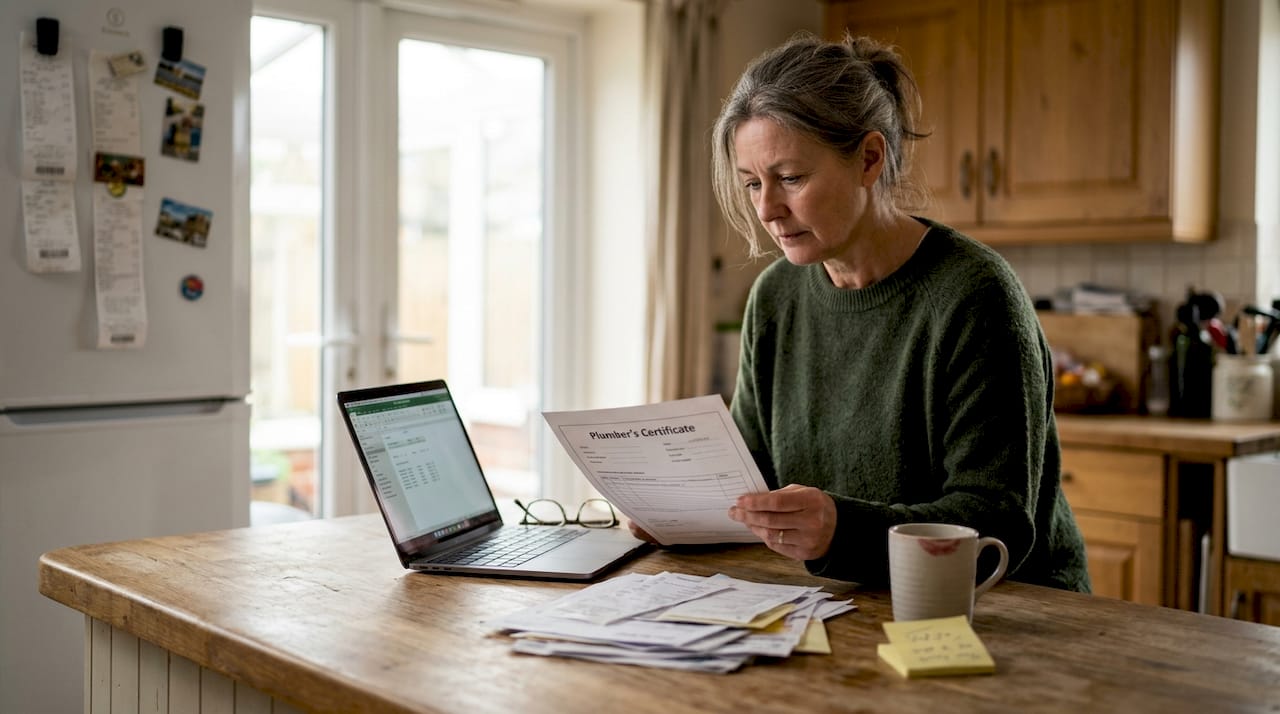
The hidden costs of uncertified work include repeat callouts, water damage remediation, structural repairs, insurance shortfalls, and solicitor delays if you sell the property. Certified professionals help prevent the kind of costly issues and major repairs that uncertified work routinely creates.
| Cost factor | Certified plumber | Uncertified plumber |
|---|---|---|
| Upfront labour cost | Moderate to higher | Often lower |
| Repeat repair probability | Low | Higher |
| Insurance compliance | Maintained | Risk of voidance |
| Resale impact | Neutral to positive | Potential red flag |
| Hidden damage risk | Minimised | Significant |
Here is how to assess whether a cheap quote is hiding future risk:
- Ask for certification upfront. If the plumber hesitates or cannot provide a registration number, that alone is a warning sign.
- Check what is included. A low quote that excludes materials, call-out, or a guarantee is rarely the bargain it appears.
- Request at least two quotes. A significant gap between quotes usually means something is being omitted.
- Look at reviews specifically mentioning reliability over time, not just the initial job.
- Factor in insurance implications. If the work voids your cover, the true cost of the cheap option could be catastrophic.
Consider a hypothetical: a homeowner in Reading saves £120 by hiring an unregistered plumber to install a new boiler feed. Eighteen months later, a slow leak behind the airing cupboard rots the subfloor. Remediation costs £3,800. The cost of certified repairs is almost always lower than the cost of fixing someone else's mistakes. Protecting home value and plumbing quality go together, especially if you ever plan to sell.
Why expert credentials are worth every penny: Our view
We have responded to hundreds of emergency callouts across the Thames Valley, and the pattern is consistent. The jobs that cost homeowners the most are almost never the original problem. They are the consequence of work done cheaply, quickly, and without proper credentials.
"A mate who knows pipes" or a quick search for the lowest quote might feel sensible in the moment. But plumbing is not a domain where good intentions substitute for verified competence. Water under pressure, connected to your mains supply and your insurer's expectations, demands proper knowledge.
What we have learned is that the upfront cost difference between certified and uncertified is almost always smaller than homeowners assume. The advantages of certified plumbers only become visible over time, often when something goes wrong and you discover your protection is intact rather than absent. Credentials are not a bureaucratic nicety. They are the evidence that someone knows what they are doing, carries the right insurance, and stands behind their work. Always verify before you agree.
Connect with trusted, certified plumbers in the Thames Valley
If this article has clarified one thing, it is that the plumber you choose matters far beyond the day of the job. At 999Plumber, every engineer we send is certified, insured, and vetted. No call-out charge, no fix no fee, and credentials you can check.

Whether you need to book an emergency plumber tonight or want reliable help for a planned installation, we cover the full Thames Valley. From a 24hr emergency plumber in Newbury to an emergency plumber in Didcot, our team is local, available around the clock, and always qualified. Book online in minutes and know exactly who is coming to your door.
Frequently asked questions
What certifications should I check when hiring a plumber in the UK?
Look for WaterSafe, WIAPS, or CIPHE registration for plumbing work, and always check Gas Safe for anything involving gas. No mandatory UK-wide plumber licence exists, so these voluntary schemes are your most reliable indicator of competence.
Can hiring an uncertified plumber affect my home insurance?
Yes. Uncertified plumbers can void insurance cover for plumbing-related damage, meaning your insurer may reject a claim even if the original fault was not your doing.
Are certified plumbers more expensive than non-certified ones?
Upfront costs are often similar, but certified professionals help prevent the repeat repairs, water damage, and insurance shortfalls that make uncertified work far more costly over time.
How do I verify a plumber's certification?
Visit the relevant scheme's website, such as watersafe.org.uk or the WIAPS directory, enter the plumber's name or registration number, and confirm their status before any work begins.