TL;DR:
- Early water leak detection prevents costly damage and saves money in Thames Valley homes.
- Visual checks, simple tools, and professional equipment help identify leaks before they become emergencies.
- Promptly shutting off water and calling professionals reduces damage and supports insurance claims.
A hidden water leak is one of those problems that starts quietly and ends expensively. One week you notice a slightly higher water bill; a few months later, you're pulling up floorboards and dealing with black mould. Thames Valley homes, many of them older Victorian and Edwardian properties, carry particular risks because ageing pipework and shifting ground conditions create ideal conditions for slow, invisible leaks. This guide walks you through exactly how to spot trouble early, what tools you need, and when to act fast so that a small drip never becomes a full-blown emergency.
Table of Contents
- Why early water leak detection matters
- Tools and checks for detecting water leaks at home
- Step-by-step guide: how to check your home for leaks
- Common leak locations and signs you should never ignore
- What to do if you suspect or find a water leak
- Why DIY leak detection is just the start
- Protect your home with expert leak detection services
- Frequently asked questions
Key Takeaways
| Point | Details |
|---|---|
| Spot problems early | Finding leaks quickly keeps your home safe and saves on costly repairs. |
| Use proper tools | Simple checks and the right kit help detect hidden leaks before they grow. |
| Act fast | If you suspect a leak, quick action and professional help prevents serious damage. |
| Regular checks | Schedule regular inspections to avoid being caught out by hidden water leaks. |
Why early water leak detection matters
Water is patient. It will find the tiniest gap in a joint, seep behind tiles, and sit inside a wall cavity for months before you see any visible sign. By the time damp patches appear on your ceiling or your skirting boards start to warp, the damage is already done. Early leak detection saves homeowners money and prevents costly property damage that can run into thousands of pounds.
Thames Valley properties face a specific set of challenges. Many homes in towns like Newbury, Reading, and Abingdon were built over a century ago, with lead or iron supply pipes that have long passed their reliable lifespan. Seasonal ground movement, particularly during dry summers followed by wet winters, puts pressure on underground pipework and can cause joints to shift and crack.
Here is what undetected leaks can lead to if left unchecked:
- Structural damage to joists, plasterwork, and foundations
- Mould growth that triggers respiratory problems, especially in children and older adults
- Inflated water bills that climb steadily without explanation
- Damaged insulation and electrics if water reaches wiring or loft spaces
- Voided home insurance claims if you cannot show you acted promptly
The financial stakes are real. A burst pipe or prolonged hidden leak can cost anywhere from a few hundred to tens of thousands of pounds to repair, depending on how long it has been running. Knowing about emergency plumbing protection before an emergency strikes is far better than scrambling for help at midnight.
"The best time to check for a leak is before you have any reason to suspect one. Regular checks cost nothing and can save everything."
Your water company also wants to hear from you. Water UK leak advice confirms that household leaks waste billions of litres each year across the country, and early reporting helps everyone. Acting early is not just good for your wallet; it is good for the local water supply too.
Now that you know why acting early is crucial, let's look at what you will need to check for leaks.
Tools and checks for detecting water leaks at home
You do not need specialist equipment to start looking for leaks. Most early-stage checks rely on observation, patience, and a few items you already own. That said, knowing which tools exist at each level of detection helps you decide how far to take your investigation.
Leaks are often detected early by using a combination of visual inspection and simple monitoring tools, rather than expensive technology alone.
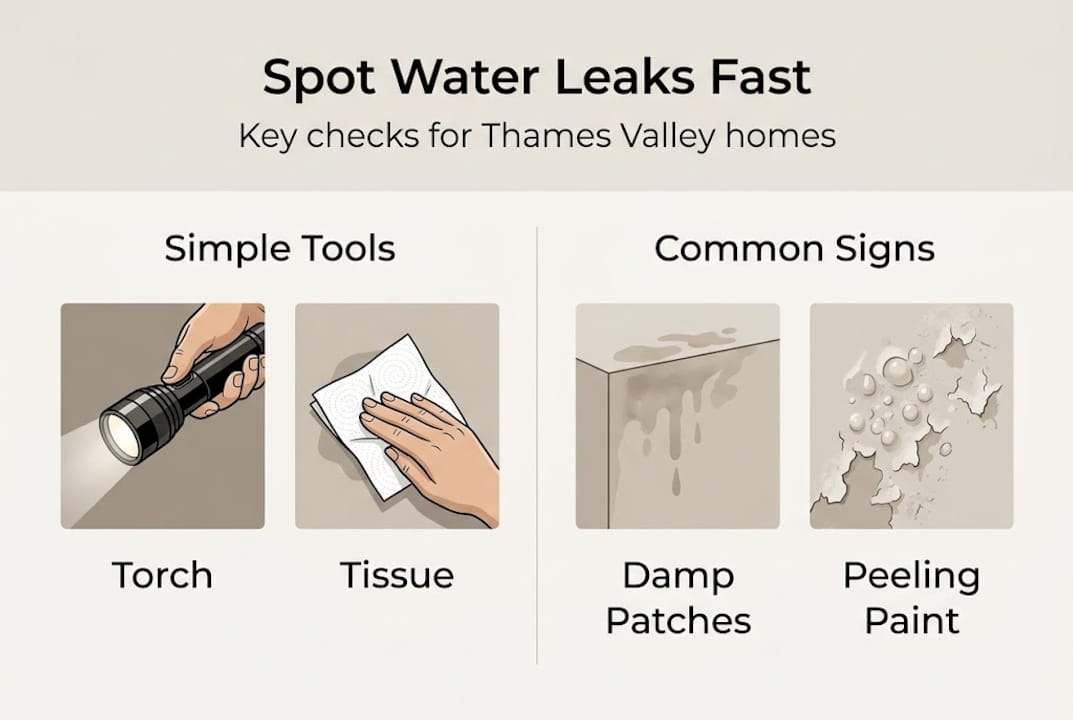
| Tool | What it does | Cost |
|---|---|---|
| Torch | Illuminates dark under-sink and loft areas | Free (already own) |
| Kitchen roll or tissue | Reveals moisture on pipes and joints | Pence |
| Notebook and pen | Logs meter readings over time | Free |
| Moisture meter | Measures dampness inside walls and floors | £20 to £60 |
| Smart leak detector | Alerts your phone if water is detected | £25 to £80 |
| Thermal imaging camera | Finds hidden wet spots behind surfaces | Professional use |
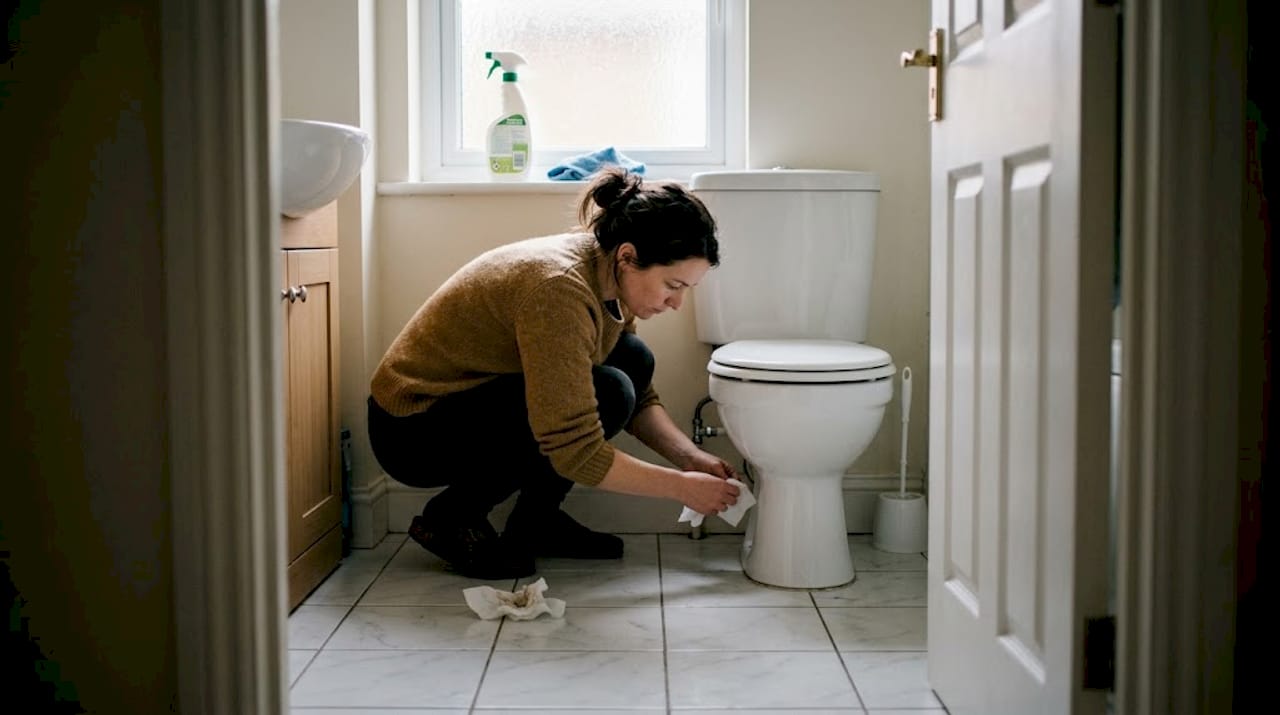
For most homeowners, the torch, tissue, and notebook approach covers the majority of detectable leaks. Run a piece of dry kitchen roll along the underside of pipes beneath your kitchen sink, behind the washing machine, and around the base of your toilet. Any dampness on the paper tells you moisture is present.
Smart leak detectors are worth considering if you travel frequently or have a second property. They sit on the floor near appliances and send an alert to your phone the moment they sense water. They will not find a leak inside a wall, but they catch appliance failures before they flood a room.
For anything inside walls, floors, or underground, you need a professional. Specialists use trace and access equipment to find external leaks without unnecessary excavation, saving your garden and your driveway.
Pro Tip: Check your water meter late at night when the household is asleep and no water is being used. Write down the reading, wait one hour, then check again. Any movement confirms water is flowing somewhere it should not be.
If you suspect a leak near the road or pavement, reporting leaks to Thames Water directly is the right first step, as mains pipes outside your boundary are their responsibility.
Step-by-step guide: how to check your home for leaks
A methodical approach works far better than a quick glance around the kitchen. Work through each area of your home in a set order so nothing gets missed.
- Start at the water meter. Locate your external stop-tap and meter, usually near the front boundary. Write down the reading. Avoid using any water for two hours, then check again. A changed reading with zero usage points directly to a leak.
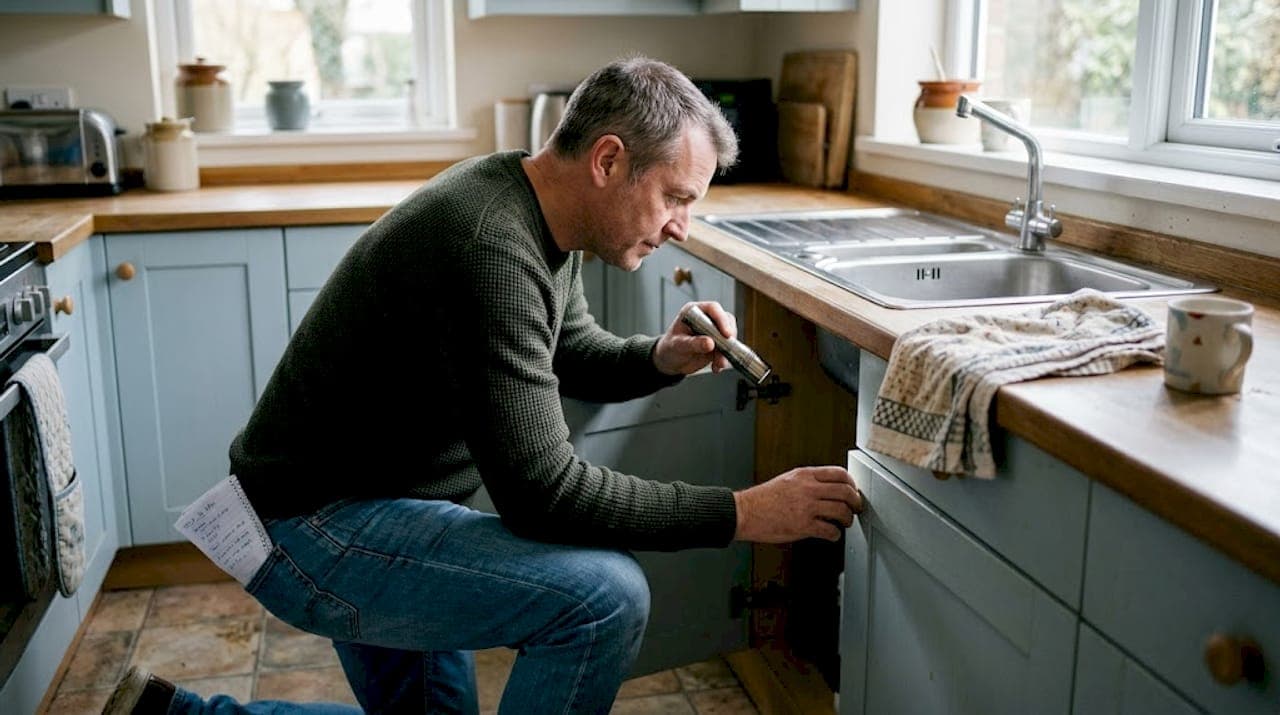
- Check under every sink. Use your torch and dry kitchen roll. Look at the pipe joints, the waste trap, and the flexible hoses connecting to the mains. Staining or white mineral deposits around joints are signs of past or ongoing drips.
- Inspect the toilet cistern. Add a few drops of food colouring to the cistern and wait fifteen minutes without flushing. If colour appears in the bowl, the flapper valve is leaking silently.
- Look behind and under appliances. Pull your washing machine and dishwasher forward slightly and check the floor and hose connections. Even a slow drip will eventually rot the flooring beneath.
- Check the loft and airing cupboard. Cold-water tanks, hot-water cylinders, and the pipework around them are common leak points, especially after a cold snap.
- Inspect outdoor areas. Walk around the outside of your property and check garden tap connections, external stop-taps, and any visible pipework. Soft or unusually green patches of ground can indicate a buried leak.
Most leaks are found in kitchens, bathrooms, and exterior pipes, so prioritise those areas first.
Statistic to know: According to Ofwat on household leaks, household leakage accounts for a significant proportion of total water lost in England and Wales each year. Even a small dripping tap wastes around 5,500 litres annually.
Pro Tip: Take photos of any damp patches, staining, or suspect areas as you go. Dated photos are useful evidence if you need to make an insurance claim or call in professional leak detection later.
If you find something but are unsure of the source, quick plumbing fixes can help with minor issues while you arrange a proper assessment.
Common leak locations and signs you should never ignore
Knowing where leaks hide most often saves you time and helps you focus your checks. Thames Valley homes tend to share similar weak spots, particularly in properties built before the 1980s.
Here are the warning signs that always deserve immediate attention:
- Damp patches on walls, ceilings, or floors that appear without an obvious cause
- Bubbling or peeling paint on walls or ceilings, especially near pipework
- Musty or earthy odours in rooms that are normally dry
- Persistent sound of running water when no taps, showers, or appliances are in use
- Unexplained rise in your water bill over one or two billing periods
- Warped skirting boards or swollen wooden floors near bathrooms or kitchens
| Location | Common leak source | Warning signs |
|---|---|---|
| Kitchen | Sink waste trap, dishwasher hose | Damp under sink, musty smell |
| Bathroom | Toilet cistern, bath seal, shower tray | Soft floor, peeling tiles |
| Boiler cupboard | Central heating pipes, expansion vessel | Drips, rust staining, pressure loss |
| Loft | Cold-water tank, overflow pipe | Damp ceiling below, running overflow |
| Garden | External tap, buried supply pipe | Soggy ground, green patches |
| Meter box | Supply pipe connection | Wet meter box, low pressure indoors |
Ignoring early leak signs often leads to emergency repairs and costly home restoration that could have been avoided entirely.
"A musty smell in a dry room is never just a musty smell. It is your home telling you something is wrong behind the surface."
If you spot any of these signs, do not wait to see if they resolve on their own. Follow the emergency plumbing steps relevant to your situation and act the same day.
What to do if you suspect or find a water leak
Finding a leak, or strongly suspecting one, calls for a calm and ordered response. Panic leads to mistakes; a clear plan limits damage.
- Turn off the water at the mains stop-tap. This is usually located under the kitchen sink or where the supply pipe enters your property. Turning it off stops the flow and prevents further damage while you assess the situation.
- Turn off your boiler and immersion heater. If the leak is near your heating system or hot-water cylinder, switching off the heat source prevents pressure build-up and reduces risk.
- Document everything with photos. Photograph damp patches, dripping joints, water staining, and any damaged materials. Note the time and date. This protects your insurance position.
- Contact your water provider if the leak is outside. For properties supplied by Thames Water or Wessex Water, Wessex Water leak advice confirms that supply pipe leaks on the public side of your boundary are their responsibility to fix.
- Call a professional for anything inside your property. A qualified plumber can trace the source accurately and carry out a lasting repair. A rapid response to leaks limits damage and can prevent emergencies, as outlined in the emergency plumbing workflow for Thames Valley homes.
Pro Tip: Know where your mains stop-tap is before you ever need it. Show every adult in your household where it is and make sure it turns freely. A stop-tap that has seized from years without use is useless in an emergency.
"The difference between a manageable repair and a major restoration is often just a matter of hours. Acting fast is always the right call."
Why DIY leak detection is just the start
There is real value in checking your own home regularly. You will catch the obvious drips, the staining under the sink, and the toilet that runs quietly overnight. Those checks matter and they do save money. But it is worth being honest about the limits of what an untrained eye can find.
Many of the most damaging leaks in Thames Valley properties are completely invisible at surface level. They run inside cavity walls, beneath concrete floors, or along buried supply pipes. No torch or tissue paper will find those. Professional expert leak assessment uses acoustic listening equipment, thermal imaging, and pressure testing to locate problems that would otherwise remain hidden for years.
There is also the insurance angle. If you ever need to make a claim for water damage, insurers often require evidence that the leak was identified and reported promptly. A professional report from a qualified engineer carries far more weight than your own notes.
The most effective approach combines both. Do your own checks every few months, act on anything you find, and book a professional survey if you have older pipework, persistent damp, or unexplained bill increases. That combination gives you the best possible defence against the kind of damage that turns a home upside down.
Protect your home with expert leak detection services
If your checks have raised concerns, or you simply want the reassurance of a professional opinion, 999Plumber.co.uk is ready to help. We operate across the Thames Valley 24 hours a day, seven days a week, with no call-out charges and a no-fix-no-fee promise that means you only pay for results.

Our engineers use industry-leading detection tools to find leaks fast, whether they are behind walls, under floors, or buried in your garden. From a quick water leak detection service to a full emergency response, we keep things simple and stress-free. You can book an emergency plumber online in minutes, or call your local 24hr emergency plumber directly. Do not wait for a small problem to become a big one.
Frequently asked questions
How can I tell if my water meter shows a leak?
Turn off all water in your home and check if the meter's reading still moves. If it does, a leak is likely present, and unexplained meter movement is one of the most reliable early indicators.
What are the first signs of a water leak indoors?
Look for damp patches, mould, peeling paint, or the sound of running water when no taps are on. These common signs of leaks are easy to miss but important to act on quickly.
Who is responsible for repairing a water leak outside my house?
You are typically responsible for leaks on your private pipework, while your water company covers the external mains. Property owners are responsible for pipe leaks within their boundary, so knowing where your boundary lies matters.
Should I try fixing a leak myself or call a plumber?
Minor drips can be managed temporarily, but always call a professional if the source or scale is unclear. Professional help is recommended for hard-to-find or persistent leaks to avoid making the problem worse.