TL;DR:
- Drain problems develop gradually from grease, hair, food, and root build-up over time.
- Regular professional cleaning prevents severe blockages, reduces damage, and extends pipe lifespan.
- Older homes require careful inspections before hydro-jetting to avoid pipe damage.
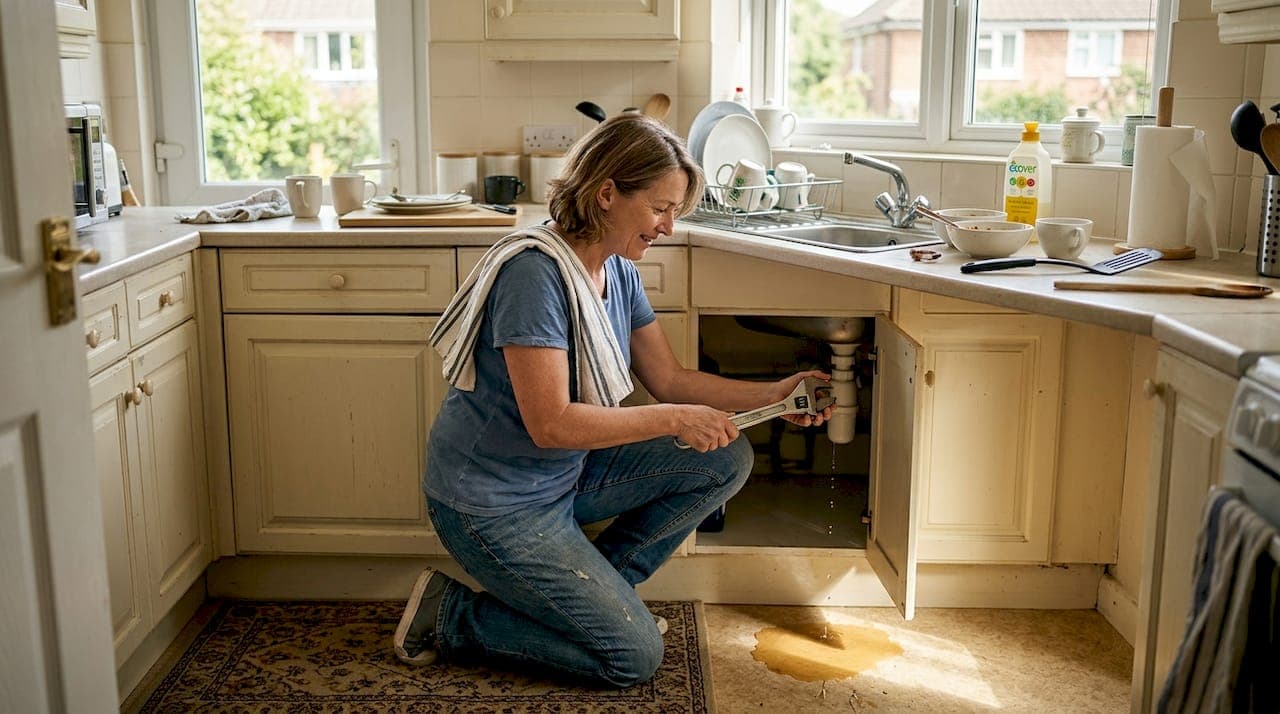
Most homeowners never think about their drains until water starts backing up in the sink or the bathroom floor begins to flood. That reaction is understandable, but it means the real damage has already been done quietly, over months or years. Blockages rarely appear from nowhere. They build gradually, layer by layer, until one day your plumbing simply refuses to cooperate. This article walks you through what causes drain problems, which cleaning methods actually work, why routine care saves you money in the long run, and when it is time to stop guessing and call in a professional.
Table of Contents
- What causes household drain issues and why cleaning matters
- Core drain cleaning methods: pros, cons and best uses
- Why prevention beats cure: the real advantages of a regular cleaning routine
- Special consideration for older homes and when to call an expert
- Our take: why 'out of sight' problems are the most costly for Thames Valley homeowners
- Book a professional drain cleaning service for peace of mind
- Frequently asked questions
Key Takeaways
| Point | Details |
|---|---|
| Hidden risks | Routine cleaning stops unseen blockages turning into costly emergencies. |
| Best cleaning methods | Mechanical snaking is quick for minor clogs, but hydro-jetting clears deep-set debris more thoroughly. |
| Eco-friendly solutions | Professional water-based cleaning is safer for your pipes and the environment than chemicals. |
| Special care for older pipes | Older homes need an expert inspection before advanced cleaning to prevent pipe damage. |
| Local support | Thames Valley homeowners can avoid plumbing headaches with easy access to professional drain services. |
What causes household drain issues and why cleaning matters
Drains are not passive pipes. Every day, they handle fat, soap residue, food scraps, hair, limescale, and in older gardens, tree roots pressing against the pipework. None of these offenders announce themselves. They settle quietly on pipe walls and narrow the flow bit by bit.
The most common culprits behind blocked drains include:
- Cooking grease and oils, which cool and solidify inside pipes
- Hair and soap scum, which tangle together into stubborn clumps
- Food particles, particularly starchy or fibrous scraps from kitchen sinks
- Limescale build-up, especially in hard-water areas like much of the Thames Valley
- Tree and shrub roots, which seek moisture and can crack or infiltrate pipe joints
Grease, hair and debris lead to long-term pipe issues if left unaddressed, restricting flow and creating an ideal environment for bacteria to thrive. The frustrating part is that the early stages look invisible. Your water still drains, just a little slower than before. By the time you notice a genuine blockage, the accumulation inside the pipe may be substantial.
Regular cleaning interrupts this cycle before it reaches crisis point. Removing debris every year or so means blockages rarely become severe, and small problems get spotted before they turn into costly repairs. This is also how you avoid those moments where you find yourself searching urgently for emergency plumbing steps at midnight.
"Hydro-jetting scours pipe walls in a way that mechanical snaking simply cannot match. Snaking punches a hole through the blockage, but high-pressure jetting removes the material clinging to the inside of the pipe entirely. It's the difference between clearing a path and cleaning the road."
Understanding the value of professional plumbers becomes obvious once you see what a trained engineer can find that a homeowner never would. Routine professional visits are not a luxury. For most Thames Valley homes, they are simply good housekeeping.
Core drain cleaning methods: pros, cons and best uses
Knowing what builds up in your drains sets the stage for understanding how different cleaning methods work and which is best for your home.
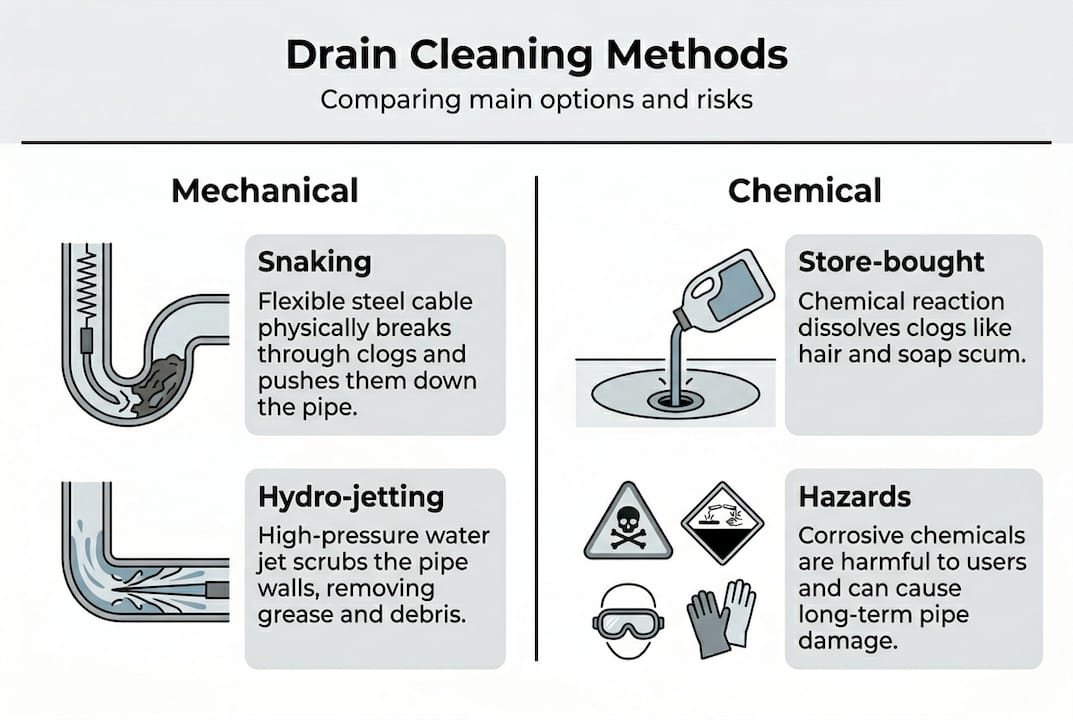
There are two primary professional methods used today: mechanical snaking (also called augering) and hydro-jetting. Each has its place, and choosing the wrong one can make things worse, not better.
Mechanical snaking is for simple clogs, while hydro-jetting at 1,500 to 4,000 PSI (pounds per square inch, the measure of water pressure) is reserved for deep greasy, scaled, or root-invaded pipes. PSI is simply a way to describe how forcefully the water jet hits the blockage and the pipe wall.
| Method | Best for | Limitations |
|---|---|---|
| Mechanical snaking | Simple or soft blockages | Leaves residue on pipe walls |
| Hydro-jetting | Grease, roots, heavy scale | Not safe for fragile or older pipes |
| Chemical cleaners | Surface clogs only | Can corrode pipes and harm drains |
| CCTV inspection | Diagnosing unknown issues | Inspection only, not a cleaning method |
Hydro-jetting is eco-friendly because it uses only water, but it can damage fragile or older pipes if used without a prior inspection. This is why a CCTV (closed-circuit television) survey, where a small camera is fed through the pipe, is essential before any high-pressure work is carried out.
As for chemical drain cleaners sold at the supermarket, they are worth avoiding. They may shift a surface clog temporarily, but they can corrode plastic and metal pipework over time and contribute to environmental pollution when they reach the water table. For a more reliable approach to common plumbing issues, the quick plumbing fixes guide outlines safer first steps you can take before calling a professional.
Pro Tip: Always request a CCTV survey before any hydro-jetting work on drains in a property built before the 1980s. It takes only a short time and could prevent significant pipe damage.
Why prevention beats cure: the real advantages of a regular cleaning routine
With the methods clear, let's consider why a regular approach puts you miles ahead of last-minute fixes.
Reactive plumbing is expensive. An emergency call-out when drains overflow means paying premium rates, accepting disruption at short notice, and potentially dealing with water damage to floors, walls, and even foundations. Preventive cleaning, by contrast, fits into a schedule and costs a fraction of crisis repairs.
Consider the difference:
| Scenario | Typical cost range | Disruption level | Risk to property |
|---|---|---|---|
| Annual professional cleaning | Lower, planned expense | Minimal, scheduled | Very low |
| Emergency blockage call-out | Higher, unplanned cost | High, often urgent | Moderate to high |
| Structural pipe repair | Significant cost | Major, extended | High |
The five key ways that proactive drain cleaning protects your home:
- Prevents emergency call-outs by catching blockages before they become urgent
- Eliminates foul odours caused by rotting organic matter trapped in pipes
- Reduces risk of water damage to floors, ceilings, and plaster
- Extends the lifespan of your pipework and drain connections
- Maintains property value by avoiding hidden defects that surface during surveys
Just as regular boiler servicing keeps your heating running efficiently and avoids costly breakdowns, routine drain care keeps your plumbing system in good health year-round. The logic is identical: small, consistent investment now versus unpredictable, large costs later.
"Professional cleaning over DIY methods ensures thoroughness that chemicals simply cannot replicate, without the risk of corroding your pipework in the process."
If you want to understand more about avoiding worst-case scenarios, emergency plumbing protection explains the steps Thames Valley homeowners can take to shield their property from sudden plumbing failures.
Special consideration for older homes and when to call an expert
While prevention applies across the board, homes with decades-old pipes need special care. Here is what to watch for.
Older properties across the Thames Valley are often fitted with cast iron, clay, or early plastic pipes. These materials were built to last, but they are not indestructible. Modern cleaning methods, particularly high-pressure hydro-jetting, can cause real harm to pipes that are already cracked, corroded, or misaligned at the joints.
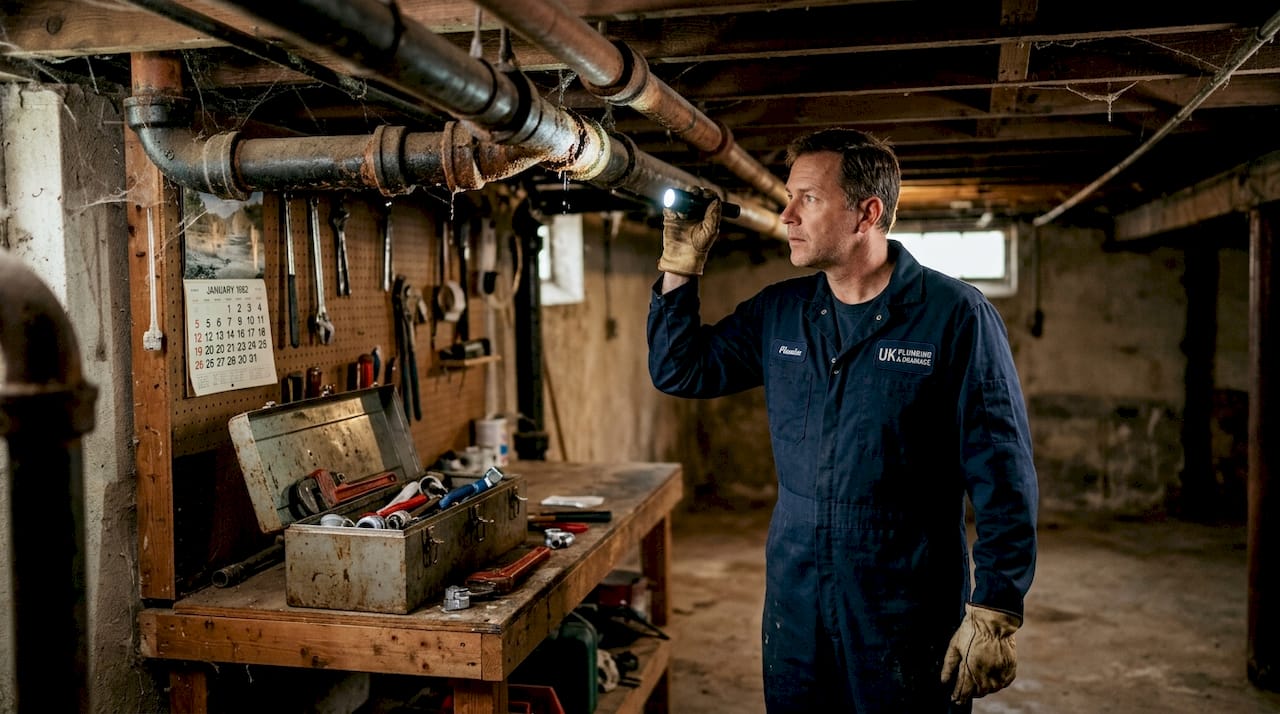
Hydro-jetting is risky for old, cast iron, or clay pipes and should only be attempted after a CCTV pre-inspection confirms the pipe is in suitable condition. Skipping this step is one of the most common mistakes we see, and it can turn a manageable blockage into a broken pipe.
Signs that your home needs a professional rather than a DIY attempt:
- Drains that are slow across multiple rooms simultaneously
- Repeated blockages in the same drain within weeks
- Gurgling sounds from pipes when water drains elsewhere in the house
- Persistent unpleasant smells despite surface cleaning
- Visible dampness around external drain covers or soil pipes
These symptoms suggest a systemic problem, not just a surface clog. A plumbing surveys guide can help you understand what a professional inspection involves and what it typically reveals. Learning to spot leaks early is equally valuable, since pipe deterioration and drain blockages often share the same root cause.
Pro Tip: Never allow any contractor to use hydro-jetting on your drains without first running a camera inspection. A reputable engineer will always recommend this step for properties over 40 years old.
Our take: why 'out of sight' problems are the most costly for Thames Valley homeowners
All these practical points add up to a larger lesson we see time and again in Thames Valley homes. The most expensive damage is almost never caused by a single dramatic event. It accumulates quietly, invisibly, over years of neglect. A slow drain ignored for 18 months can become a collapsed pipe requiring excavation. A little grease build-up in the kitchen sink, left unchecked, can create a blockage that backs up into a washing machine or dishwasher, causing appliance damage on top of plumbing repairs.
We believe drains deserve the same routine attention that homeowners already give to boilers, gutters, and roofs. The advantages of year-round plumbing support become obvious once you shift your thinking from reactive to preventive. When you stop waiting for disasters and start managing your plumbing like any other part of your home, you spend less, stress less, and sleep better. That is not a dramatic claim. It is simply what we see every day.
Book a professional drain cleaning service for peace of mind
If you have been putting off drain maintenance, now is a practical moment to act before a small issue becomes an urgent one.

At 999 Plumber, we provide professional drain unblocking and jetting for homes across the Thames Valley, with no call-out charges and a no fix no fee promise. Whether you want to schedule a routine clean or you need fast help with an existing problem, our engineers are available around the clock. You can book a plumber online in minutes, with no fuss and no waiting on hold. Preventive care is always easier than emergency repairs, and we are here to make it straightforward.
Frequently asked questions
How often should household drains be professionally cleaned?
Most homes benefit from annual professional cleaning. Homes with heavy kitchen use or nearby trees may need more frequent checks to prevent persistent build-up.
Are chemical drain cleaners safe for pipes?
Chemical cleaners damage pipes over time and can harm the environment. Mechanical or professional cleaning methods are always the safer and more effective choice.
Can hydro-jetting damage older pipes?
Yes. Hydro-jetting risks older pipes that are cracked or fragile, which is why a CCTV camera inspection should always come first before any high-pressure work.
What are common signs I need my drains cleaned?
Slow drainage, repeated blockages, or bad smells all suggest build-up is present. Blockages build slowly and these early warning signs are your prompt to book a professional inspection before things worsen.
Recommended
- Why regular boiler servicing protects your home and budget
- Emergency plumbing steps: protect your Thames Valley home
- Quick plumbing fixes for Thames Valley homes: a guide
- Emergency plumbing workflow: step-by-step guide for Thames Valley homes
- Drain Surveys London | CCTV Drainage Inspections & Reports - Pest Control 24 London