TL;DR:
- Many common heating faults can be diagnosed and fixed by homeowners before calling a professional.
- Safety checks include turning off power and verifying thermostat, power supply, and pressure.
- Persistent problems or gas-related issues require professional Gas Safe engineers for safe repairs.
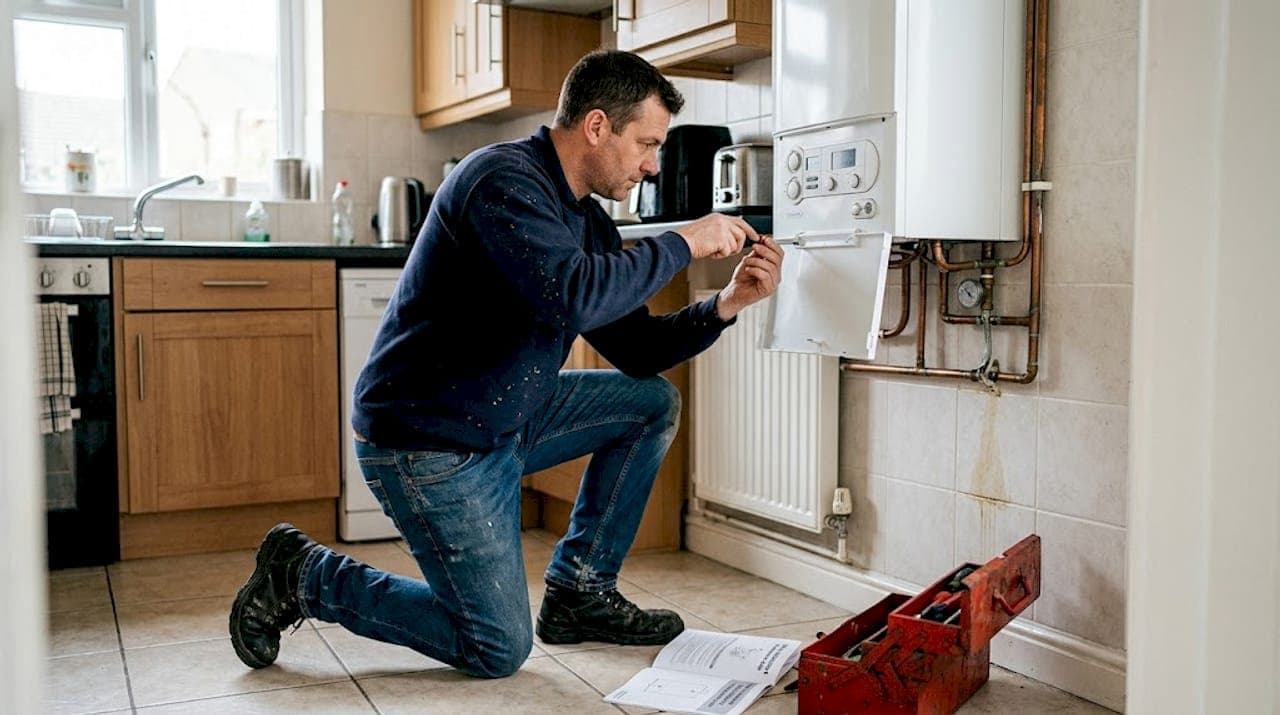
Waking up to a cold house in the middle of a Thames Valley winter is one of those frustrations that hits hard and fast. Whether your radiators are stone cold, your boiler has gone quiet, or certain rooms simply refuse to warm up, heating problems have a way of escalating if you leave them unchecked. The good news is that many of the most common faults are things you can diagnose yourself before calling anyone out. This guide walks you through practical, step-by-step troubleshooting so you can restore your comfort quickly, safely, and without unnecessary expense.
Table of Contents
- Essential tools and safety checks before troubleshooting
- Step-by-step guide: the most common home heating problems
- Diagnosing boiler issues: pressure, lockouts, and frozen pipes
- Troubleshooting radiators, noises, and uneven heating
- A fresh perspective: when expert help saves more than money
- Fast, local heating help: trusted solutions for Thames Valley
- Frequently asked questions
Key Takeaways
| Point | Details |
|---|---|
| Quick checks matter | Simple checks on your thermostat and boiler power can resolve many common heating issues. |
| Safe DIY steps | Tasks like bleeding radiators and thawing condensate pipes are safe if done correctly and with caution. |
| Know your limits | Persistent faults, noises, and system lockouts often need professional Gas Safe engineer intervention. |
| Preventative maintenance | Regular servicing and early action can save you from major repairs and unexpected breakdowns. |
Essential tools and safety checks before troubleshooting
Before you touch anything, gather the right equipment. Working on a heating system without preparation is how small issues become expensive ones. You do not need a toolbox full of specialist gear, but a few basics will make the process far safer and more effective.
Essential tools to have ready:
- Flathead and Phillips screwdrivers
- A radiator bleed key
- Adjustable spanner
- Torch (for checking behind and beneath boilers or pipework)
- Protective gloves
- A dry towel or small container (for catching water)
- Pen and paper (to note fault codes or pressure readings)
Safety first: Always switch off the power to your heating system at the mains before beginning any inspection or repair work. If you suspect a gas leak, do not touch any switches. Leave the property, call the National Gas Emergency number on 0800 111 999, and wait for a qualified Gas Safe engineer.
Once you have your tools ready and the system is safely powered down, run through the following quick checks. Diagnose central heating problems by confirming thermostat settings, power supply, and the boiler switch are correct before assuming a serious fault exists. These three checks alone resolve a surprising number of call-outs.
| Check | What to look for | Action |
|---|---|---|
| Thermostat | Correct temperature set, not on timer off | Adjust settings or replace batteries |
| Power supply | Boiler switch on, no tripped circuit breaker | Reset breaker or restore power |
| Visible leaks | Damp patches near boiler or radiators | Turn off system, call a professional |
| Boiler pressure gauge | Should read between 1.0 and 1.5 bar | Top up via filling loop if low |
If you are ever unsure about what you are seeing, our emergency heating repair guide covers Thames Valley-specific scenarios in more detail.
Step-by-step guide: the most common home heating problems
With the right tools in hand and safety checks done, you are ready to work through the most frequent faults homeowners in the Thames Valley encounter.
No heat at all
- Check the thermostat is set above the current room temperature.
- Confirm the boiler is switched on and there are no error codes displayed.
- Check your home's fuse box for any tripped switches.
- Look at the boiler pressure gauge. Low pressure (below 1.0 bar) will stop the system working.
- If none of these resolve it, consult our boiler breakdowns guide for next steps.
Radiators cold at the top
This almost always means trapped air. Bleed radiators to release that trapped air; if the radiator is cold at the bottom instead, sludge build-up is usually the cause and needs flushing.
Radiators cold at the bottom
This points to magnetite sludge settling in the system. Bleeding will not fix this. The system may need a chemical flush or power flush carried out by a professional.
Airflow and filter problems
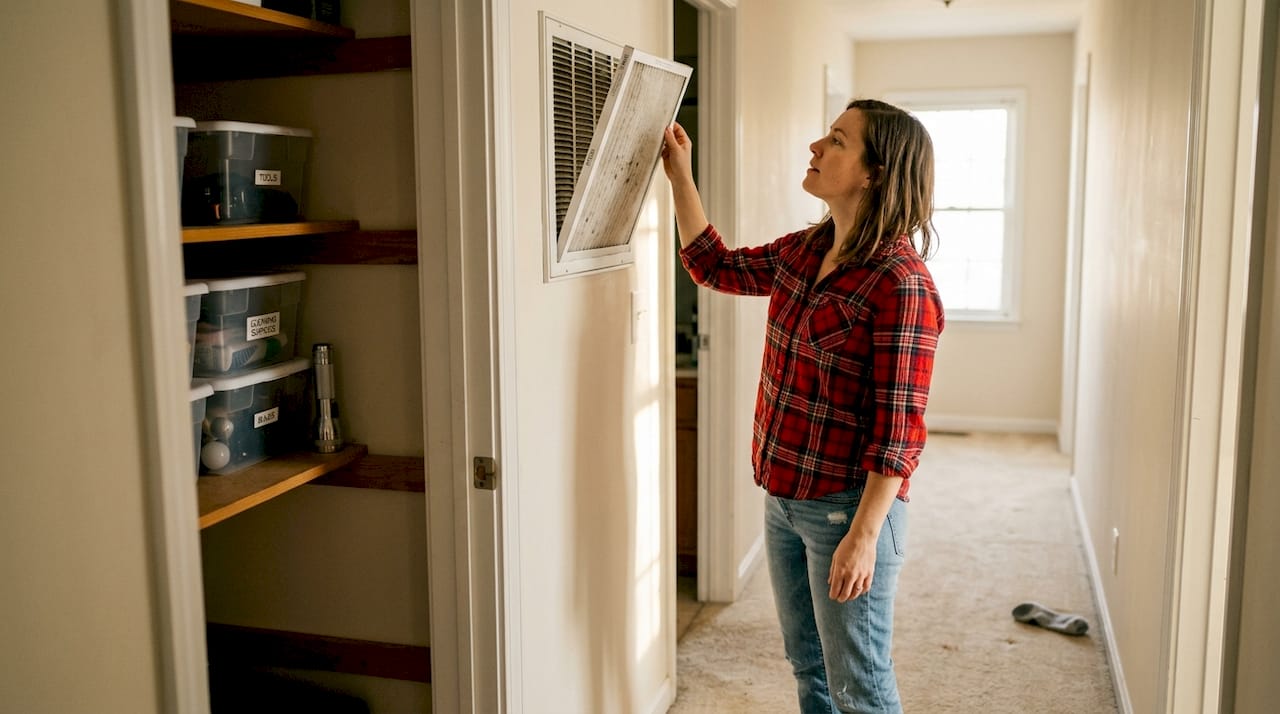
Inspect and replace dirty air filters and make sure all vents are open and unobstructed to resolve airflow issues. Blocked vents are one of the most overlooked causes of uneven heating. You can learn more about uneven heating issues and their causes if certain rooms stay cold despite the rest of the house warming up.
Pro Tip: Always bleed radiators with the system turned off and cooled down. Place a towel directly under the bleed valve before you open it, even slightly. Water can escape quickly and cause staining.
| Problem | DIY fixable | Needs a professional |
|---|---|---|
| Cold radiator top (air) | Yes, bleed it | No |
| Cold radiator bottom (sludge) | No | Yes, power flush |
| Tripped circuit breaker | Yes, reset | Only if it keeps tripping |
| Boiler error code | Sometimes, reset | Yes, if it recurs |
| Visible pipe leak | No | Yes, immediately |
If you are spotting boiler fault signs such as repeated error codes or unusual smells, do not delay getting a professional involved.
Diagnosing boiler issues: pressure, lockouts, and frozen pipes
Boiler-specific faults are where many homeowners feel out of their depth. They do not need to be frightening if you know what you are looking at.
Low boiler pressure
- Locate the pressure gauge on the front of your boiler.
- A healthy pressure reading sits between 1.0 and 1.5 bar when the system is cold.
- If it reads below 1.0 bar, find the filling loop (usually a silver or grey braided hose beneath the boiler).
- Open both valves slowly until the gauge rises to around 1.2 bar.
- Close the valves and switch the boiler back on.
Boiler lockout
A lockout is your boiler's way of shutting itself down to prevent damage. Boiler lockout usually happens from repeated ignition failures. Press the reset button once and wait. If it locks out again within a short period, stop resetting it and call a Gas Safe engineer. Repeated resets can mask a serious underlying fault. You can find a broader overview of boiler problems and fixes to understand the range of potential causes.
Frozen condensate pipe
This is extremely common across the Thames Valley during cold snaps. The condensate pipe carries waste water from a condensing boiler to the outside drain. When it freezes, the boiler shuts down. Frozen condensate pipes are a frequent cause of boiler failure in cold UK weather and are straightforward to thaw at home.
- Locate the condensate pipe (usually a white plastic pipe running outside).
- Identify the frozen section, often where the pipe is most exposed to cold air.
- Pour lukewarm water (not boiling) along the frozen section.
- Once thawed, reset the boiler.
Pro Tip: Never use boiling water on a frozen condensate pipe. The sudden temperature change can crack the pipe and turn a simple thaw into a plumbing job.
For ongoing peace of mind, our boiler maintenance checklist is worth reviewing before each winter season, and our boiler service tips explain how regular servicing prevents many of these faults from occurring.
Troubleshooting radiators, noises, and uneven heating
Once you have ruled out boiler faults, the next culprit is often the radiators themselves or how heat is distributed through your home.
What those noises actually mean
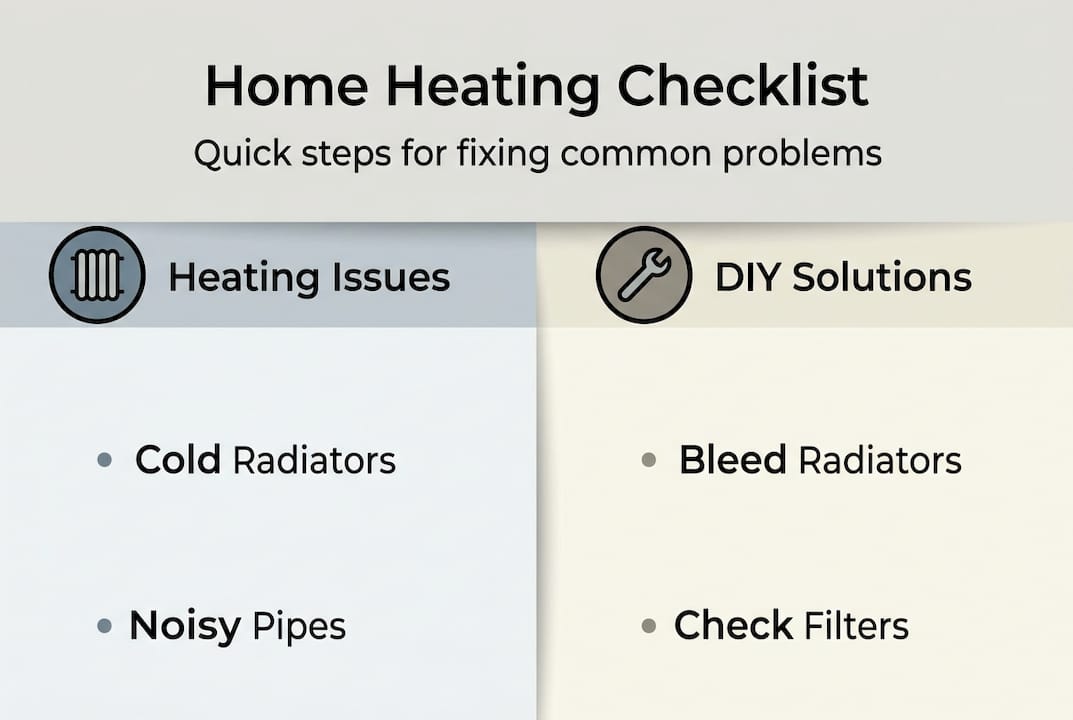
Gurgling sounds indicate trapped air; banging or kettling noises point to sludge or limescale build-up, and both require professional flushing if they persist. A gentle hiss is often just air escaping and is less concerning. Creaking as pipes heat up and cool down is also normal and usually harmless.
Warning: Never ignore persistent banging from your boiler or heating system. It can indicate serious limescale build-up or a failing pump. Similarly, any visible water leak near a radiator or pipe joint should be treated as urgent.
Uneven heating across rooms
Uneven heating often results from poor balancing, blocked vents, or duct problems and can be improved by adjusting the lockshield valves on each radiator. A lockshield valve is the capped valve on one side of the radiator that controls flow rate. Adjusting these so radiators furthest from the boiler receive more flow is called balancing.
Quick tips for balancing radiators:
- Start with all lockshield valves fully open.
- Turn on the heating and note which radiators heat up first.
- Slightly close the lockshield on the nearest (fastest-heating) radiators.
- Repeat over a few heating cycles until all rooms reach a similar temperature.
- Call a professional if the issue continues after balancing attempts.
For longer-term results, regular boiler servicing prevents the sludge and scale build-up that causes most noise and balancing issues in the first place. If persistent heating noise does not respond to bleeding or balancing, a power flush is likely needed.
A fresh perspective: when expert help saves more than money
There is a tendency among homeowners to push through heating problems with DIY fixes. It is understandable. Calling an engineer feels like an expense, and a quick reset or bleed feels like a win. But we have seen the results of delayed professional attention more times than we can count, and the pattern is consistent: a small fault left untreated becomes a costly repair or a full system replacement.
Older heating systems over five to ten years old are particularly prone to sludge accumulation, meaning simple radiator bleeding will not resolve the underlying problem. A power flush, carried out correctly, can restore system efficiency and extend the life of the boiler significantly.
The uncomfortable truth is that gas and electrical faults are not a space where caution pays dividends later. They pay dividends immediately. Always call a professional for faults that involve gas, recurring lockouts, or any leak near electrical components. Gas Safe engineers are not just a legal requirement for gas work; they are your protection against a fault that could cause serious harm.
Pro Tip: If your boiler is over ten years old and breaking down regularly, get an engineer to assess whether repair or replacement is more cost-effective. Sometimes the honest answer is replacement.
Fast, local heating help: trusted solutions for Thames Valley
If you have worked through these steps and still cannot restore your heating, or if you simply want the reassurance of a professional on the job, we are here around the clock.

999Plumber.co.uk provides same-day emergency call-outs across the Thames Valley, with Gas Safe certified engineers and no call-out fee to worry about. Whether you need central heating repairs carried out quickly, or you would like to book an emergency plumber online in minutes, our team is ready to respond. From Reading to Oxford, we cover the full area with fast, reliable service. If your boiler has given up entirely, our boiler repair in Newbury and wider Thames Valley team can get you warm again without the fuss.
Frequently asked questions
What should I check first if my home heating stops working?
Start by checking your thermostat settings, the main power supply, and that the boiler switch is on. These three checks alone resolve most no-heat issues before any further investigation is needed.
Is it safe to bleed radiators myself?
Yes, it is generally safe as a DIY task, but always switch the system off first and place a towel under the bleed valve. Trapped air release is the fix for a cold top on a radiator, while cold bottoms indicate sludge and need professional attention.
What does it mean if my boiler keeps locking out?
Repeated lockouts signal an underlying fault in the system. Reset after lockout once following your checks, but call a Gas Safe engineer immediately if it happens again rather than continuing to reset.
How do I safely thaw a frozen condensate pipe?
Pour lukewarm water gently along the frozen section of pipe and avoid boiling water entirely. Once the pipe has thawed, reset your boiler and it should fire back up normally.
When should I call a professional for heating repairs?
Call an engineer for any gas-related fault, recurring boiler lockout, electrical involvement near heating components, or when DIY steps fail. Boiler lockout recurrence is one of the clearest signs that a qualified engineer is the only safe next step.